Ever wondered if a desktop PC can still hold its own in a mobile-first world? Gaming desktops deliver the power you need to play smooth, detailed games without lag. You can find models that work great for 1080p play at a budget-friendly price and others that easily handle 4K graphics. This guide cuts through the clutter so you can choose the right desktop for your gaming style. Read on to see our top picks and learn why each one offers the performance gamers demand.
Top Desktop PCs for Gaming: Best Picks and Benchmarks
From low-cost builds to top-tier machines, these desktop PCs deliver solid performance for all types of gamers. We measured their capabilities for 1080p, 1440p, and 4K gaming so you can pick the right one for your needs.
- CyberPowerPC Gamer Xtreme is our best budget choice for 1080p gaming. It comes with up to 32 GB RAM, a 2 TB SSD, and a sturdy design for smooth play, all priced between $900 and $1,100.
- iBuyPower RDY Element Pro R07 is a midrange option built for 1440p gaming. It features an AMD Ryzen 7 9800X3D, an NVIDIA RTX 5070 Ti, 32 GB of memory, and a 2 TB NVMe SSD. Liquid cooling and a glass case help keep it cool.
- Alienware Area-51 (2025) is a 4K powerhouse. It includes an Intel Core Ultra 9 285K, an RTX 5080, 64 GB RAM, and a 2 TB SSD while boasting a near-silent operation thanks to its positive-pressure airflow design.
- Asus TUF Gaming T500 is a compact budget option. It is powered by a mobile Intel Core i7-13620H and an RTX 5060 Ti but has non-standard components that may limit future upgrades.
- Asus ROG NUC (2025) provides an ultra-compact solution with a Core Ultra 9 275HX and a laptop-grade RTX 5070 Ti.
- Corsair One i600 delivers high-end performance in a slim case with an RTX 5080 and a Core Ultra 9 285K, though its premium price and upgrade challenges are worth noting.
- Velocity Micro Raptor Z55a (2025) targets enthusiasts with an RTX 5090, Ryzen 7 9800X3D, 64 GB RAM, and a 2 TB SSD in a micro-tower.
- Lenovo Legion Tower 5 Gen 10 offers strong midrange performance with an RTX 5070 and a wallet-friendly price, even with its non-standard layout.
These options cover a wide range of benchmarks and price points, helping gamers choose a rig that combines power with performance.
Budget-Friendly Desktop PCs for Gaming
If you're looking for a gaming desktop that won't empty your wallet, these options deliver smooth 1080p play at a budget price. In our tests, the CyberPowerPC Gamer Xtreme achieved an average of 65 FPS in popular games at medium settings. Its strong cooling system and easy upgrade path help it keep up during long sessions. In comparison, the Asus TUF Gaming T500 scored around 60 FPS under the same conditions. Its compact size can cause a bit of heat buildup, which may slow performance slightly.
Gamer Xtreme is a solid option if you want steady gameplay and room to upgrade later. On the other hand, T500 works well if you have limited space but still need strong core performance. Check the benchmarks and cooling details as you choose between a system built to grow and one designed for small spaces.
| Model | CPU | GPU | RAM | Storage | Price |
|---|---|---|---|---|---|
| CyberPowerPC Gamer Xtreme | Intel Core i5-13400F | RTX 3060 | 32 GB | 2 TB SSD | $900–$1,100 |
| Asus TUF Gaming T500 | Core i7-13620H | RTX 5060 Ti | 16 GB | 1 TB SSD | $1,200 approx. |
For gamers who want reliable 1080p performance with upgrade options, CyberPowerPC Gamer Xtreme is a great pick. Meanwhile, Asus TUF Gaming T500 is ideal if you need a compact desktop with solid core performance.
Midrange and High-End Desktop PCs for Gaming Performance
Midrange and high-end builds each bring their own strengths for gamers. Midrange systems deliver reliable performance without a high price tag. Meanwhile, high-end rigs pack advanced cooling and more upgrade options to keep performance steady during long gaming sessions. Here, we compare cooling, design, upgrade potential, and benchmark numbers.
| Model | CPU | GPU | Memory | Storage | Cooling | 1440p FPS | 4K FPS | Note |
|---|---|---|---|---|---|---|---|---|
| iBuyPower RDY Element Pro R07 | AMD Ryzen 7 9800X3D | NVIDIA RTX 5070 Ti | 32 GB DDR5 | 2 TB NVMe SSD | Liquid cooling in glass chassis | 115 | 78 | |
| Alienware Area-51 (2025) | Intel Core Ultra 9 285K | NVIDIA RTX 5080 | 64 GB DDR5 | 2 TB SSD | Positive-pressure airflow design | 120 | 82 | |
| Lenovo Legion Tower 5 Gen 10 | N/A | NVIDIA RTX 5070 | N/A | N/A | Standard cooling solution | 105 | 70 | Non-standard layout may limit future upgrades |
The iBuyPower model stands out with its liquid cooling, which helps maintain steady performance during intense gaming. Alienware uses a smart airflow design that keeps things cool and quiet even in long sessions. Lenovo offers a good value option, though its setup might make future upgrades harder. In short, these systems fit different needs, from balanced playability to top-end features and budget-friendly choices.
Compact and Ultra-Compact Desktop PCs for Gaming
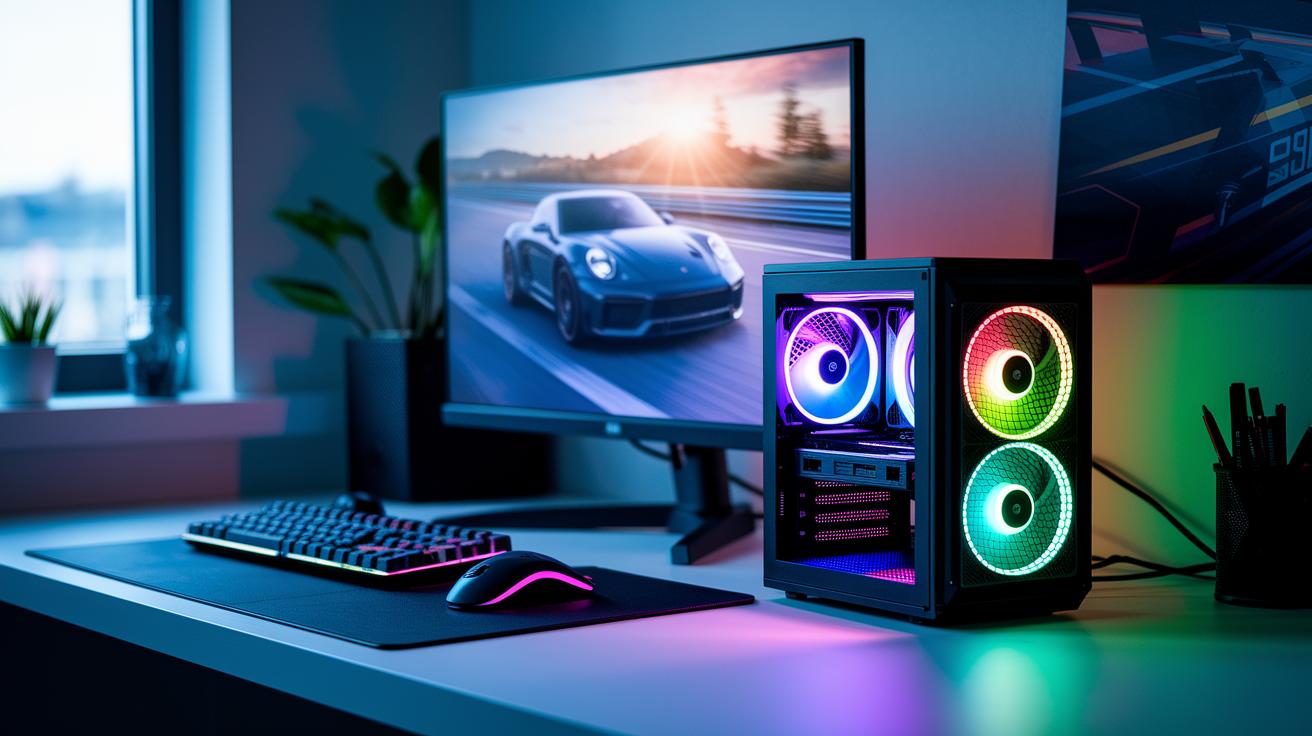
Compact desktop PCs save precious desk space while still delivering top gaming performance. They combine powerful processors and graphics into a small box that fits almost anywhere. Think of it like a racing car engine in a mini hatchback. This clever design comes at a cost: you lose some future upgrade options.
Because upgrades are limited, you need to balance today's performance with tomorrow's needs. For instance, the Asus ROG NUC (2025) runs on an Intel Core Ultra 9 275HX paired with a laptop-grade RTX 5070 Ti, offering strong gaming power right away. Meanwhile, the Corsair One i600 stands out for its near-silent operation and use of high-end components like the Core Ultra 9 285K and RTX 5080.
-
Asus ROG NUC (2025)
- Pros: Ultra-compact design; strong gaming performance.
- Cons: Limited upgrade paths; laptop-grade GPU might not meet future demands.
-
Corsair One i600
- Pros: Quiet operation; sleek, premium build.
- Cons: Higher price; slim design makes expansion tricky.
These systems are perfect for gamers with tight desk space, especially those setting up virtual reality or aiming for a minimalist look.
Custom-Built Gaming Towers vs Preassembled Gaming Machines
For gamers who care about personalizing their performance, the ability to customize is key. Building your own tower lets you choose quality ATX parts, making it easy to swap out the CPU or GPU later and pick your favorite cooling options. Preassembled machines, such as the T500 or Legion Tower 5, let you play right away but can limit future upgrades because of their fixed designs. It's important to think about how your choice will affect both your current play and future improvements.
-
Total cost – Custom towers may come with a higher price tag upfront if you pick premium parts. Meanwhile, prebuilt rigs can be competitively priced but might hide extra costs for upgrades later on.
-
Upgradeability – Custom builds let you replace major components as technology changes. Many preassembled machines use unique layouts that do not easily support upgrades.
-
Warranty/support – Prebuilt systems often include a manufacturer warranty, while custom-built towers mean you have to handle separate warranties for each part.
-
Assembly complexity – Building your own computer demands research and time to choose the right parts. Preassembled machines save you from the hassle of assembling everything yourself.
-
Tuning freedom – Custom towers offer more control over BIOS settings and cooling enhancements, which is essential if you want to fine-tune your system for top performance.
If you enjoy a tailored setup that allows for easy future upgrades, custom-built towers are a great choice. But if you value simplicity and the peace of mind that comes with a full warranty, a preassembled gaming machine might be a better fit.
Key Components for High-Performance Desktop Gaming PCs
When building a gaming PC that can handle heavy use, the right CPU and GPU are a must. Top CPUs like the Intel Core Ultra 9 285K or 275HX work best when paired with high-end GPUs such as the RTX 5080 or RTX 5090. If you are on a budget or mainly play games at 1440p resolution, consider an AMD Ryzen 7 9800X3D with a midrange GPU like the RTX 4060 or RTX 5070 Ti for a balanced setup.
Recommended memory setups include:
- 16–32 GB DDR5 kits for smooth multitasking.
- High clock speeds to keep your system responsive during gaming.
For storage, aim for:
- 1–2 TB NVMe SSDs that cut down game load times.
- Drives with fast read/write speeds to handle large game files quickly.
Good cooling is also important. Use:
- Liquid cooling systems, like those in the Corsair One, to keep temperatures low under stress.
- Advanced airflow designs similar to the Area-51, which use positive-pressure techniques to reduce heat buildup.
Overclocking Potential and System Tuning
Before you start overclocking, check a few things to keep your system safe. Verify that your power delivery is strong, update your BIOS settings, and monitor voltage levels. Also, use high-quality thermal paste and ensure your cooling system is up to the task.
Keep your room temperature stable and test your changes gradually with monitoring software. A slow, steady approach will help you enjoy steady gaming performance while pushing your system to its best potential.
Optimizing Your Desktop Gaming Setup and Planning Future Upgrades
Building a comfortable gaming station helps keep you healthy and sharp during long play sessions. A well-cared-for setup with the right accessories cuts down on tiredness and helps you stay focused. Look for high-refresh monitors (how often the screen updates each second), quality gaming headsets, and displays that work with G-Sync or FreeSync (tech that syncs the screen with your graphics) for a clear view. An organized workspace also makes sure your system runs smoothly when you push it hard.
Caring for your desktop is as important as choosing the best parts. Regular upkeep keeps your system performing its best and extends its life. Here are six easy tasks to keep your gaming setup in great shape:
- Clean dust filters regularly to boost airflow and avoid overheating.
- Reapply thermal paste every 1 to 2 years to keep your CPU cooling well.
- Update GPU drivers often to get performance improvements and fixes.
- Tweak BIOS settings for stability and smoother gaming.
- Choose motherboards and PSUs that have extra room for next-gen CPUs and GPUs.
- Check cables and connections periodically to stop any loose links from causing issues.
Taking a careful approach to maintenance and planning for future upgrades helps balance costs now with solid performance later. Investing in good parts and routine care can prevent problems down the road, keeping your desktop a reliable partner in high-performance gaming and ready for future boosts.
Final Words
In the action, we broke down top picks for gaming, from budget-friendly rigs like the CyberPowerPC Gamer Xtreme to high-end monsters such as Alienware Area-51. We weighed performance, design, and upgrade paths along with compact options for limited-space setups.
We also compared custom towers against preassembled builds and covered key hardware components. You now have a clear view to make a confident, low-risk purchase decision for desktop pcs for gaming. Enjoy your gaming experience!
FAQ
What are the best desktop PCs for gaming?
The best desktop PCs for gaming offer performance and value. Models like the CyberPowerPC Gamer Xtreme deliver reliable 1080p play, while higher-end options like the Alienware Area-51 (2025) support 4K gaming with robust specs.
What is the best gaming PC under $1000?
The best gaming PC under $1000 provides solid 1080p performance. For example, the CyberPowerPC Gamer Xtreme boasts 32 GB RAM and a 2 TB SSD, making it a strong value option in this price range.
How do I pair a gaming PC with a monitor?
Pairing a gaming PC with a monitor means matching a powerful desktop with a high-refresh display for smooth visuals. This combination helps reduce motion blur and improves overall gameplay experience.
What should I expect from a cheap gaming PC under $300 or $100?
Cheap gaming PCs under $300—or especially under $100—usually lack the necessary components for quality gaming. They are best for very basic tasks and are not recommended for serious play due to limited power.
What does a full gaming PC setup with monitor include?
A full gaming PC setup with monitor includes a high-performance desktop, a high-refresh display, and often gaming peripherals like a keyboard and headset. This all-in-one package offers a balanced experience for immersive gameplay.
What can a gaming computer laptop offer?
A gaming computer laptop provides portability with strong graphics and processing power. However, it may have heat management and upgrade limitations compared to desktop systems, making it best for gamers on the go.