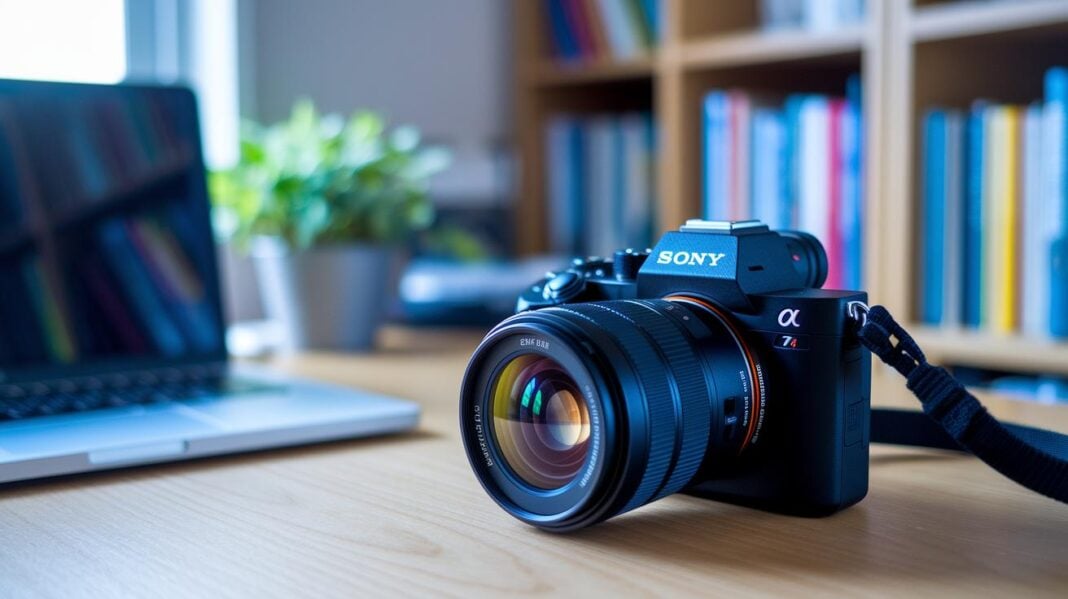
Ever wondered if an old-school tool can still shine today? Sony DSLR cameras blend timeless design with modern tech to capture clear, detailed photos. They come in both full-frame and APS-C sensor versions, making them ideal for beginners and pros alike. With sturdy, weather-sealed bodies and optical viewfinders that keep your shots sharp, these cameras offer both durability and high performance. Read on to see why a Sony DSLR might be the perfect choice for capturing standout images.
sony dslr cameras: Brilliant Shots Await
Sony DSLR cameras are a solid choice if you value a classic approach paired with modern reliability. They offer both full-frame and APS-C sensors for clear, detailed photos. For example, models like the Sony SLT-A99 II and A77 II come with large sensors, dust-resistant shutters, tough magnesium bodies, and weather sealing. Their optical viewfinders and AA Filter Simulator help keep your shots crisp.
These cameras work smoothly with the Sony A-mount lens lineup. This means you can pick from many native or third-party lenses. Whether you shoot for work or as a hobby, you’ll find a model in the price range, from around $500 for entry-level options to about $2,800 for the flagships. If you need to save money, a well-tested used DSLR might be just the ticket.
| Model | Sensor (MP & Size) | Viewfinder Type | Price Range |
|---|---|---|---|
| SLT-A99 II | 42.4 MP Full-frame | Optical | $2,800 |
| A77 II | 24.3 MP APS-C | Optical | $1,200 |
| A68 | 24.2 MP APS-C | Optical | $600 |
| A580 | 16 MP APS-C | Optical | $500 |
| A700 | 12.2 MP APS-C | Optical | $700 (used) |
With a strong focus on build quality and dynamic range, Sony DSLR cameras bring a traditional shooting feel with today’s performance features. Their design and sensor tech ensure each frame is captured with care, making them a reliable tool for any photographer.
Key Specifications and Advanced Controls of Sony DSLR Cameras
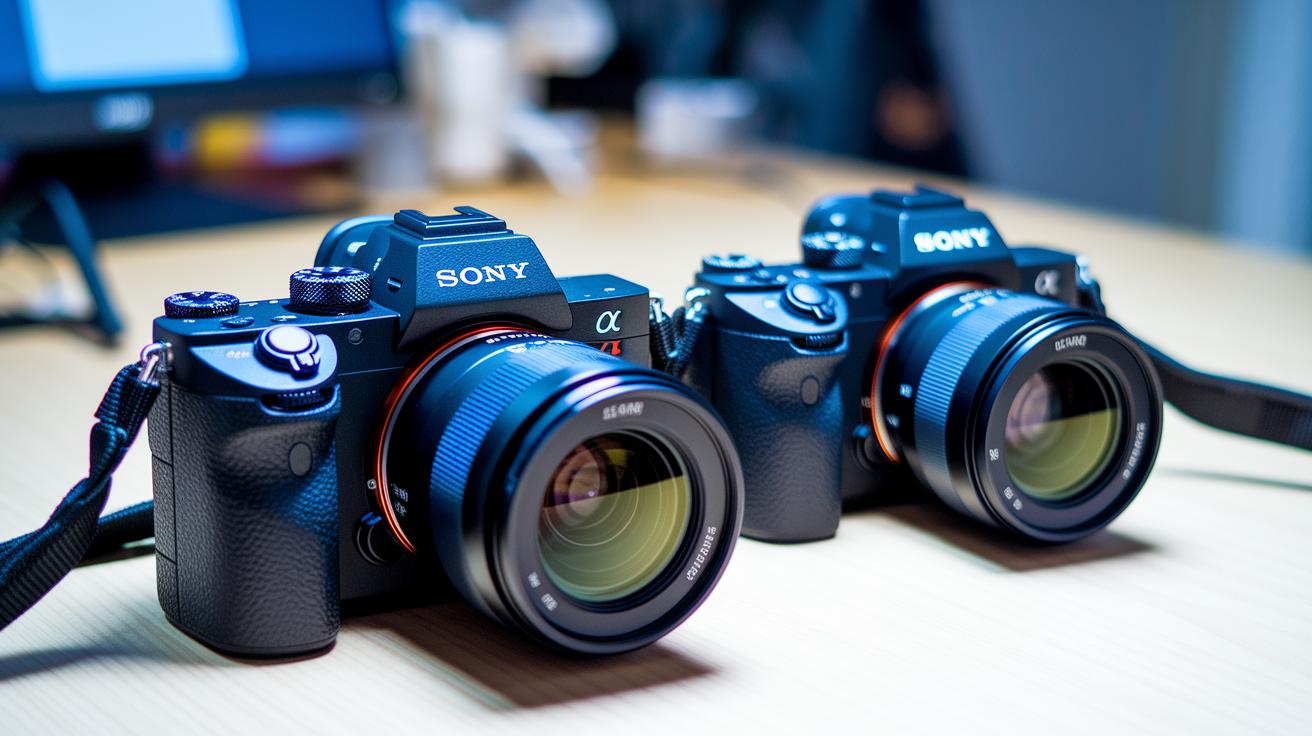
Sony DSLR cameras offer a solid shooting experience that gives you full control over your photos. They feature a familiar manual layout that experienced photographers love. With dedicated dials for shutter speed and aperture and customizable function buttons, you can set the controls to match your style. Plus, advanced autofocus systems help capture each shot with great accuracy.
Key features include:
- A manual control layout with dedicated dials and easily adjusted function (Fn) buttons.
- Advanced autofocus options, like a 79-point phase-detection system on the A99 II and a 15-point system on the A77 II.
- Shutter speeds up to 1/8000 s and an X-sync speed of 1/250 s for flash photography.
- A native ISO range from 100 to 25600, expandable to 51200 on flagship models.
- A dynamic range of about 14 stops to pick up details in both shadows and highlights.
- Durable, weather-sealed magnesium alloy bodies with anti-dust shutters.
- Battery life that lets you take approximately 600 shots per CIPA test, perfect for long shooting sessions.
These details show how Sony blends mechanical controls with smart sensor tech to meet the needs of both studio shooters and outdoor photographers. The quick manual settings, precise autofocus, and wide ISO range work together to ensure you can capture quality images in a variety of lighting and weather conditions.
Comparing Sony DSLR Cameras: A-Mount Lens Compatibility and Options
Sony DSLR cameras come with the A-mount system, which lets you choose from over 50 native lenses and many options from makers like Tamron and Sigma. This broad collection means you can cover shots from wide landscapes to far-reaching telephotos. The lens range also works well with accessories like flash units, grips, remote controls, and supports tripod, gimbal mounts, and battery grips for extra stability.
Prime Optics Overview
Popular prime lenses such as the Sony 85 mm f/1.4 ZA and the Sony 135 mm f/1.8 G Master are known for their wide apertures. A wide aperture (more light) gives you a nice background blur while keeping your subject sharply in focus. These designs work well for portraits, street scenes, and low-light conditions. Their fixed focal lengths often lead to better clarity compared to zoom lenses.
Zoom Lens Selections
Sony’s zoom lenses, like the 24–70 mm f/2.8 G and the 70–200 mm f/2.8 G, offer a range of focal lengths that make them very versatile. They are great for capturing everything from scenic landscapes to fast-moving sports. While zoom lenses may not always match the edge-to-edge sharpness of prime lenses, they offer a convenient way to adjust your framing without switching lenses. Overall, the A-mount zoom options give you a solid balance between flexibility and image quality.
Practical Performance: Low-Light Capability and Autofocus in Sony DSLR Cameras

Sony DSLR cameras work great in dim light. Their special translucent mirror design lets the camera keep focusing during live view. This means you can easily capture moving subjects, even in near darkness. For example, the Sony Alpha 99 II (A99 II) can focus in very low light at -4 EV when paired with fast f/2.8 lenses, which is very useful when shooting in dark settings.
Key specifications include:
- Translucent mirror design that enables continuous autofocus during live view.
- A99 II reaching autofocus in low light at -4 EV with bright f/2.8 lenses.
- ISO capability up to 12,800 with very little noise; flagship models can extend that to 51,200.
- An optical viewfinder that gives clear, lag-free framing with 1200-zone metering for precise scene capture.
- A built-in bulb mode for long exposures up to 30 minutes with strong noise reduction.
- Quick autofocus response even when taking nightscapes.
- Customizable settings to adjust sensitivity and shutter speed for the best low-light performance.
These features work together to produce sharp and balanced images in low-light conditions. The fast and reliable autofocus, along with a clear optical viewfinder, makes Sony DSLRs a great choice for photographers looking to capture brilliant shots in any lighting.
Sony DSLR Cameras in Real-World Scenarios: Photography Styles and Usage Recommendations
Sony DSLR cameras cover many shooting needs and offer flexible tools for different photography styles. For travel, the Sony A68 with a 16–50 mm kit lens is a great pick. It is light and adaptable, making it easy to explore new cities and capture candid moments on the go.
For wildlife photography, the Sony A77 II shines with its 10 fps burst mode, especially when used with a 70–400 mm telephoto lens. This combo helps you catch fast-moving subjects in nature with ease. At events like weddings or live gatherings, the Sony A99 II delivers sharp images even in tricky lighting conditions because of its full-frame stabilization.
Here are some simple tips:
- Travel: Use the A68 with the 16–50 mm kit for a compact, versatile setup.
- Wildlife: Rely on the A77 II’s fast 10 fps burst mode with a 70–400 mm telephoto lens to freeze quick action.
- Events: Pick the A99 II to capture clear, detailed shots in low light.
- Portraits: Pair with an 85 mm f/1.4 lens for a smooth bokeh and strong subject focus.
- Landscapes: Use the depth-of-field preview and optical grid overlay for better composition.
- Macro: Choose a 100 mm f/2.8 macro lens with focus stacking to reveal intricate details.
- Time-lapse: Take advantage of the built-in intervalometer that supports up to 999 frames to record gradual changes.
Each setup caters to different photography styles, offering features that boost your shooting experience and help you capture high-quality images in real-world settings.
Buying Guide and Price Analysis for Sony DSLR Cameras
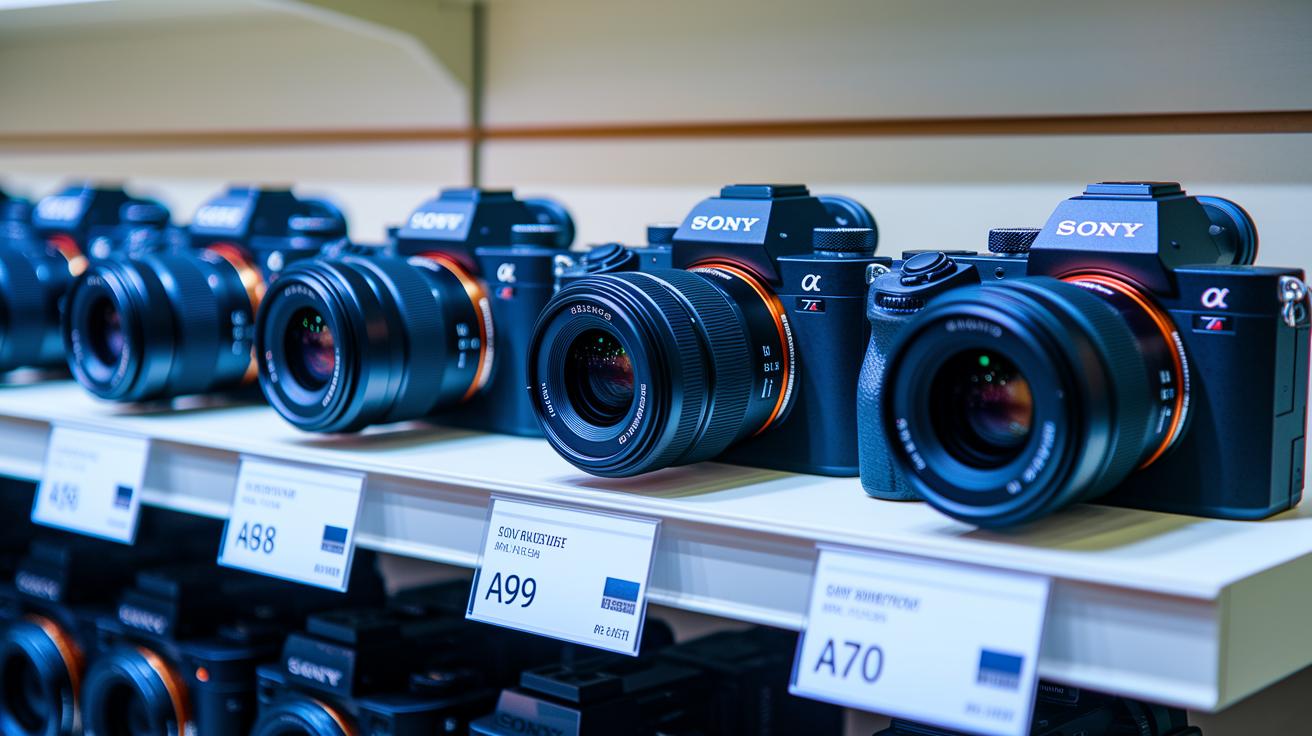
When picking a Sony DSLR camera, you want a good mix of performance and cost. New cameras start at about $600 for the Sony A68 and go up to around $2,800 for a high-end model like the Sony A99 II.
You can also consider used options if you want to save money. For example, you might find the Sony A77 II for roughly $700, and the Sony A700 usually sells between $200 and $300 in the used market. New cameras often drop in price by about 20% in their first year, which can make them more affordable when they come with lenses and accessories.
Many retailers offer extra perks such as extended warranties and bundle deals that add more value to your purchase. Watching out for price alerts and seasonal deals can also help you stretch your budget.
| Feature | Details |
|---|---|
| New bodies | Sony A99 II ~$2,800; A77 II ~$1,200; A68 ~$600 |
| Pre-owned market | Sony A77 II around ~$700; A700 between $200–$300 |
| Price drops | About 20% off within the first year |
| Bundles | Discounts available when pairing lens and body |
| Extended warranties | Offered by authorized dealers |
| Price alerts | Seasonal deals help keep costs in check |
| Software support | Sony Imaging Edge Desktop and mobile apps for tethered shooting and remote control |
By comparing both new and used models and keeping an eye on bundle deals, you can choose a Sony DSLR that meets your needs and fits your budget.
Future Outlook and Support Resources for Sony DSLR Cameras
Sony keeps improving its DSLR cameras with regular firmware updates. The latest version 2.0 for the Sony A99 II brings real-time autofocus tracking and new bracketing options that let you shoot with more flexibility. There are even rumors that the A99 III might soon hit the market with a 50 MP full-frame sensor, an upgraded electronic viewfinder, and a faster buffer. These updates show that while mirrorless cameras are on the rise, Sony is still committed to upgrading its DSLR lineup for loyal A-mount users.
Caring for these cameras is simple with smart sensor cleaning tools. A built-in vibration system helps shake off dust, and a manual cleaning mode is available for a deeper clean. This keeps the sensor free of dust so you capture clear, precise images every time.
Sony also offers strong support for its DSLR users. Here are some of the key support options:
| Support Option | Description |
|---|---|
| My PRO Support Portal | Technical help and troubleshooting |
| Dealer Locator | Find local service centers |
| Dedicated PRO Service Channels | Assistance tailored for professionals |
In addition, active user forums let photographers share real-world tips and solve common issues. These resources make it easier to keep your gear in top shape and push your creative boundaries. With ongoing updates and user feedback, Sony promises further improvements in quality and performance.
Final Words
In the action, we broke down the lineup of Sony DSLR cameras for buyers. We explored everything from sensor specs and lens compatibility to low-light performance and real-world shooting tips.
We also compared pricing, reviewed build quality, and hinted at future improvements. The guide helps you compare key models and make informed choices with real test data. Enjoy capturing life's moments with your Sony DSLR cameras and make the purchase confidently.
FAQ
What is a Sony DSLR video camera?
A Sony DSLR video camera is a digital single-lens reflex model that offers high-quality video recording, often including 4K video features along with traditional DSLR controls for versatile shooting.
What does the Sony DSLR cameras list include?
The Sony DSLR cameras list covers a range of models from entry-level to professional options. It includes models like the A99 II and A68, each offering distinct features that cater to varied photography needs.
What is meant by a Sony DSLR professional camera?
The term Sony DSLR professional camera typically refers to high-end models designed for demanding work. These cameras, such as the A99 II, feature full-frame sensors, advanced autofocus systems, and robust build quality.
What does the Sony camera price list show?
The Sony camera price list shows a range of prices from around $500 for entry-level models to approximately $2,800 for top-tier cameras. Prices vary by sensor size, features, and accessories included.
What does Sony Camera 4K mean?
Sony Camera 4K means that select Sony DSLR models support 4K video recording. This feature delivers high-resolution video quality, ideal for users seeking detailed footage and professional-grade results.
What is the Sony camera models list by year?
The Sony camera models list by year organizes releases over time, highlighting new features and improvements with each generation. This helps users see how the models have evolved and track performance upgrades.
What is the best Sony camera for professional photography?
The best Sony camera for professional photography is often the A99 II. It offers a full-frame sensor, top-notch autofocus, and a rugged build, making it ideal for photographers demanding high-quality images.
What kinds of lenses do Sony DSLR cameras use?
Sony DSLR cameras use the A-mount system, which supports a wide range of native lenses and third-party options. This allows users to choose from various prime and zoom lenses to suit different shooting styles.
Does Sony still make DSLR cameras?
Sony still makes DSLR cameras, primarily to support legacy A-mount users, even though the company is focusing more on developing mirrorless models for modern users.
Why is the DSLR format being phased out?
The DSLR format is being phased out because mirrorless cameras offer lighter designs, faster autofocus, and advanced video features. These benefits meet the evolving needs of today’s photographers more effectively.
Which is the best Sony DSLR?
The best Sony DSLR is generally considered the A99 II, thanks to its full-frame sensor, advanced manual controls, and high-performance features that satisfy professional-grade demands.
Is the Sony DSLR better than the Nikon?
Whether the Sony DSLR is better than the Nikon depends on your needs. Sony may offer superior video and autofocus, while Nikon provides excellent ergonomics and reliability, so the best choice can vary by user preference.