Ever wonder if your phone’s data is really safe? With 5G smartphones, you get extra layers of security. They use techniques like microsegmentation (dividing the network into smaller parts) and secure enclaves (special areas that store sensitive info) to protect your data. It works like a digital fortress that keeps your personal info away from potential attackers. Read on to learn how these new security features build trust in our connected world.
5g smartphone security features explained: Boosting Trust
The move from 4G to 5G not only brings faster speeds but also better protection for your data. In 4G, devices used simpler network checks. With 5G, phones connect through two parts – the mobile network and the core network. This adds extra layers of checks that help keep your data safe by isolating traffic and applying focused security measures.
5G also brings stronger cybersecurity standards. It uses microsegmentation (splitting the network into small pieces) and network slicing (creating separate channels for different data types) to boost security. There is now hardware-based encryption with secure enclaves (special built-in areas that protect sensitive data). Although extra components mean more potential entry points, these are balanced by strong security protocols.
- End-to-end encryption protects data while it moves.
- Secure network slicing keeps traffic separated.
- Hardware encryption with secure enclaves guards critical data.
- Enhanced SIM card protection stops fraud.
- Zero Trust measures safeguard the network edge.
- Intrusion detection in the 5G core spots attacks early.
These features work together as a strong, layered defense. By using advanced encryption and dedicated hardware safeguards, 5G smartphones can keep your private information safe. Whether you're messaging, shopping, or handling work, your data stays protected.
Advanced Encryption Protocols in 5G Smartphone Security
5G smartphones use built-in hardware encryption to protect your private data right when it's saved. They include special chips like Apple's Secure Enclave and Google's Titan M to store secret keys and biometric data safely. This design makes it very tough for hackers to access critical information, even if they manage to break the software. In fact, a device with a dedicated security chip can keep its secrets safe even when the operating system comes under attack.
On the software side, these devices follow Zero Trust principles by constantly checking that everything is working as it should. They use behavior analysis to spot any unusual activity, much like a sandbox (a secure test area) that limits what unknown apps can do. The phone regularly reviews its own security, ensuring every access request gets a careful look. This active approach stops malware before it can slip in, creating a strong shield against cyber threats.
Trusted standards such as FIPS 140-2 and Common Criteria back these methods, confirming they meet strict security marks. Experts are also testing new quantum-resistant techniques to face future digital threats. These evolving encryption methods are essential for keeping both personal and business data safe, whether you're sending messages or making secure financial transactions.
Multi-Factor Authentication and Biometric Access Control on 5G Smartphones
Smartphones no longer rely on simple passwords. With 5G, devices now use multi-factor authentication (MFA) that mixes biometrics with other security checks. This change makes it much harder for unwanted users to break in.
Advanced Biometric Integration
Modern phones use fingerprint, facial, iris, and voice checks. Fingerprint sensors use capacitive or ultrasonic tech for fast readings. Facial recognition works with both 2D and 3D imaging to boost accuracy. Iris scanning offers careful identity checks, and voice authentication adds an extra layer of security. Liveness detection stops fake biometrics from fooling the system.
Benefits of Multi-Factor Authentication
Mixing biometrics with PINs or tokens makes devices more secure. Studies show that this blend can lower fraud by up to 90%. Secure boot ensures that only trusted software runs when you power up your device, while token-based methods add extra protection against online attacks.
| Authentication Method | Description | Security Level |
|---|---|---|
| Fingerprint Sensor | Uses capacitive or ultrasonic tech | High |
| Facial Recognition | Uses 2D/3D camera imaging | Medium-High |
| MFA (Password + Biometric) | A blend of factors | Very High |
| Token-Based | Uses hardware or software tokens | High |
| SIM-Based | Relies on network identity checks | Medium |
These methods are kept up to date with over-the-air updates so your phone stays protected against new threats.
Secure Network Connectivity and Intrusion Detection Techniques for 5G Smartphones
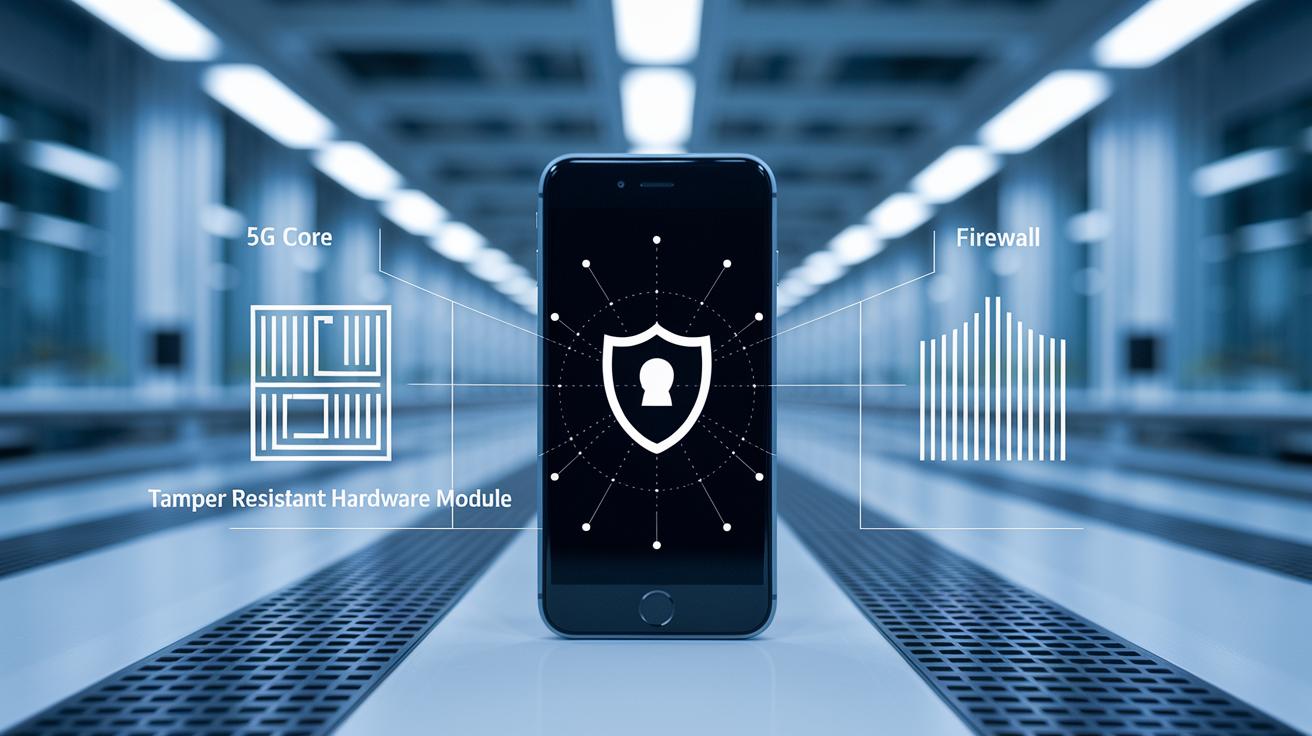
Zero Trust means your phone never trusts any connection by default. Instead, it checks every network part, whether it is the mobile network or the core network, before granting access. This risk-based check lowers the chance of threats.
Key security tools work together to protect 5G smartphones. Network slicing keeps data streams separate so that information for one service does not mix with another. Hardware Security Modules (HSMs, which securely manage cryptographic keys) store keys in tamper-resistant hardware. In addition, firewalls built into the radio access network block harmful data packets.
Real-time threat monitoring uses behavioral analysis engines to spot unusual activity. It also relies on malware defense tools, like sandboxing (a method to block unknown code), to stop rogue programs. These techniques work continuously to catch any abnormal behavior before it causes harm.
For instance, before sending sensitive data, your smartphone checks its network settings. It confirms that secure wireless protocols are active and that each data channel is properly isolated. This quick self-check makes sure your device stays safe from online threats.
Addressing Vulnerabilities and Risks in 5G Smartphone Security
The 5G ecosystem brings many new parts to the system, including extra supply chain items and network functions. This means there are more ways for bad actors to try and break in. Past issues, like the EternalBlue SMB flaw, show that slow patch updates can lead to serious breaches.
Vulnerability scanning tools now play a key role. They check for outdated firmware and insecure protocols that leave your device open to attacks. With early detection, both manufacturers and users can act fast to close these gaps.
Risk management plans suggest using over-the-air patching and strict certificate management. These steps keep the firmware updated and secure without needing manual fixes.
Security features like secure boot (which makes sure only trusted software runs) and firmware validation add another layer of defense. They help reduce the risk of harmful software and unauthorized changes. Combined with regular scanning and patching, these measures build a strong shield against evolving security threats.
Ensuring Ongoing Protection with Best Practices for 5G Smartphone Security
Keep your 5G smartphone safe by updating its software as soon as updates come out. Regular updates fix security gaps that hackers may try to exploit. Over-the-air patches send these fixes straight to your device so you don't have to download or install anything manually. This practice helps prevent the risks that come with using outdated software.
If your phone is lost or compromised, act fast. Use features like remote lock and wipe to stop unauthorized access. Change the passwords on your important accounts right away and let your carrier know about the issue. These steps help reduce damage if a breach happens.
Every day, privacy tools add another layer of defense for your device. Secure browsers and VPNs (tools that protect your online privacy) keep your data safe when you use public networks. Regularly checking app permissions and using mobile security apps also strengthen your phone’s defenses.
- Use strong, unique passwords
- Enable multi-factor authentication
- Keep your OS and apps updated
- Regularly review app permissions
- Utilize secure browsers and VPNs
Final Words
In the action, we broke down shifting security from 4G to 5G and its impact on device protection. We covered mobile encryption, multi-factor authentication, and robust network safeguards. Each section aimed at making 5g smartphone security features explained clear and approachable. We examined key defenses like hardware encryption, Zero Trust principles, and real-time threat monitoring. Together, these measures make 5G devices smarter and safer. Stay updated with regular patches and best practices to keep your data secure for peace of mind.
FAQ
How do Samsung and Verizon 5G smartphones explain their security features?
Samsung and Verizon 5G smartphones explain their security by using end-to-end encryption, secure network slicing, hardware encryption modules, and multi-factor authentication to protect data and verify network integrity.
How are 5G smartphone security features documented in PDFs and 2021 guides?
Documentation in PDFs and 2021 guides on 5G security features details methods like microsegmentation, hardware-based encryption, and secure SIM technologies that filmmakers use to protect network traffic and personal data.
What are the security challenges and solutions for 5G?
The security challenges for 5G include more potential attack vectors and vulnerabilities due to its expanded network. Solutions involve hardware encryption, Zero Trust strategies, and real-time threat monitoring to ensure robust protection.
What is the 5G security architecture all about?
The 5G security architecture centers on innovative measures such as network slicing for isolated traffic, intrusion detection systems, and secure backend networks that extend protection from the device to the core network.
What are the security issues and cybersecurity risks with 5G?
The security issues and risks with 5G involve potential vulnerabilities in network slicing, software flaws, and an increased attack surface. These risks are mitigated by strict encryption protocols and continuous threat monitoring.
Why are people turning off or avoiding 5G?
People may turn off or avoid 5G due to concerns over privacy, potential cybersecurity risks, and perceived battery consumption issues despite enhanced built-in security features protecting data.
Does 5G have built-in security?
Yes, 5G has built-in security including robust encryption methods, secure network slices, hardware-level protections, and real-time threat monitoring that work together to safeguard personal and enterprise data.