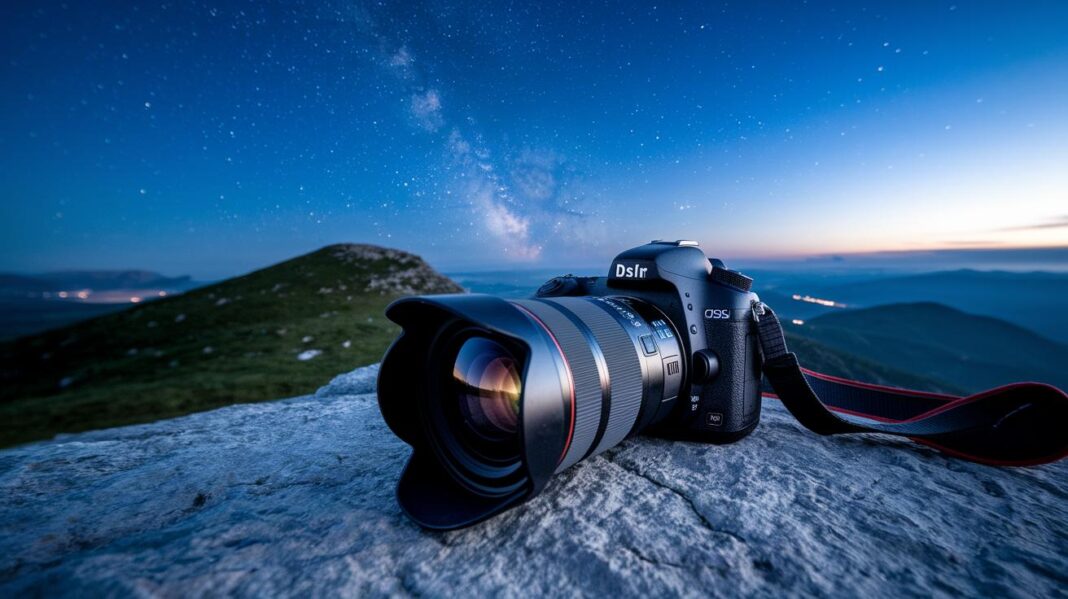
Have you ever looked up at the night sky and wished your DSLR could capture its magic? Picking the right camera for astrophotography can seem tricky when low light performance and special night settings are so important.
We compared top DSLR models that excel in dark conditions. These cameras handle long exposures and high ISO settings (which boost light sensitivity) with ease. They also feature tough builds and high-resolution sensors to capture every star detail.
Find the best DSLR here to bring your starry shots to life.
Top DSLR Cameras for Astrophotography: Head-to-Head Comparison
When you search for a DSLR to capture the night sky, a few features are key. Look for a sensor that works well in low light, strong native ISO performance, and astro shooting modes. A high-resolution sensor with an expanded ISO range cuts down on noise (grain) and captures more detail during long exposures. This matters when you want to pick out faint stars or nebulae in a deep-sky shot.
It also helps to have a sturdy build and settings made for long exposures. Cameras with special astro modes can adjust settings automatically to keep sensor noise to a minimum during night sessions. We focus on models that do well in these areas so you can get clear, detailed images of the sky even when conditions are tough.
| Camera Model | Sensor Type | Resolution | ISO Range | Approx. Price |
|---|---|---|---|---|
| Pentax K-3 Mark III | APS-C | 24 MP | 100 – ? (with specialized astro modes) | Premium |
| Nikon D850 | Full-Frame | 45.7 MP | 100 – 25,600 (expandable to 108,400) | High |
| Canon EOS Ra | Full-Frame | 30.3 MP | 100 – High | Premium* |
| Canon Rebel T7i | APS-C | 24.2 MP | 100 – Moderate | Budget (used dslr camera) |
Each camera brings unique strengths for different astrophotography needs. The Pentax K-3 Mark III comes with advanced astro features and a tough body, making it a good choice for rough outdoor conditions. The Nikon D850, with its full-frame sensor and high resolution, captures fine details for those who want sharp images. Even though the Canon EOS Ra is discontinued, its improved infrared sensitivity makes it still popular for deep-sky work. For newcomers, the Canon Rebel T7i offers a solid performance without hurting your wallet.
Key Technical Features for DSLR-Based Star Imaging
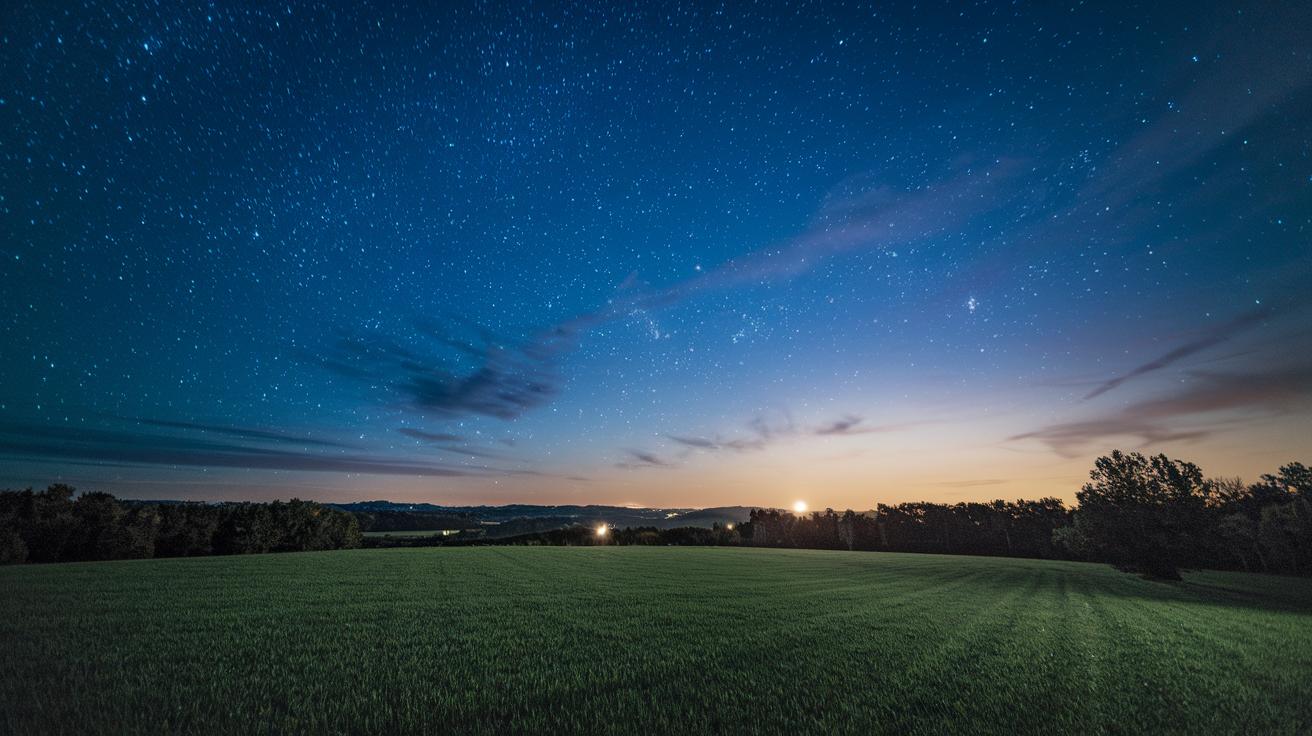
A camera's sensor size is crucial when capturing the night sky. Full-frame sensors have a larger light-catching area, which means they show less noise and more detail during long exposures. APS-C sensors work well too, especially with strong image processors. For instance, a full-frame sensor might reveal faint stars more clearly, while an APS-C body can deliver a sharp image when tuned right.
Dynamic range and ISO performance are also important for deep-sky shots. A wide dynamic range helps capture bright stars and dim nebulae in one go. The OM System OM-1 Mark II, for example, shows this by keeping overexposed areas in check and preserving subtle details. High ISO settings allow the sensor to pick up extra light in low-light conditions, which means you get more detail with less unwanted grain.
Built-in stabilization and astro shooting modes can boost your results even more. Many DSLRs need external supports like tripods for long exposures, but some offer in-body stabilization (like the 7-stop feature on the Fujifilm X-T5) to reduce blur. Additionally, astro modes in certain models, such as those from Pentax, adjust settings automatically for noise reduction during long exposures, giving you clearer starry skies.
DSLR Cameras for Astrophotography Across Budget Tiers
For newcomers or hobbyists with a tight budget, DSLR cameras under $900 offer solid entry-level performance. Models like the Canon Rebel series (T7i or XSi) have reliable sensors and basic astro features that let you capture the night sky with ease. They are great for occasional deep-sky shots and are simple to adjust as you learn more about celestial photography. If you're just starting, check out our guide to the best DSLR cameras for beginners (https://devicerankings.com?p=172).
Mid-tier DSLRs in the $900 to $1,500 range improve on things like readout noise and dynamic range. In simple terms, these cameras perform better in low-light situations. They also offer sharper auto settings and improved sensor technology, making them a smart upgrade for enthusiasts who want more than just the basics without spending a premium price.
For serious astrophotographers planning long-term deep-sky imaging, premium DSLRs above $2,000 deliver top-notch image quality and durability. Cameras such as the Nikon D850 or the Pentax K-3 Mark III offer advanced noise control and impressive resolution to capture even the faintest stars. Although the initial cost is higher, their long-term performance and rugged build make them a worthy investment for those dedicated to capturing detailed celestial photos.
Essential Lenses and Accessories for DSLR Astrophotography
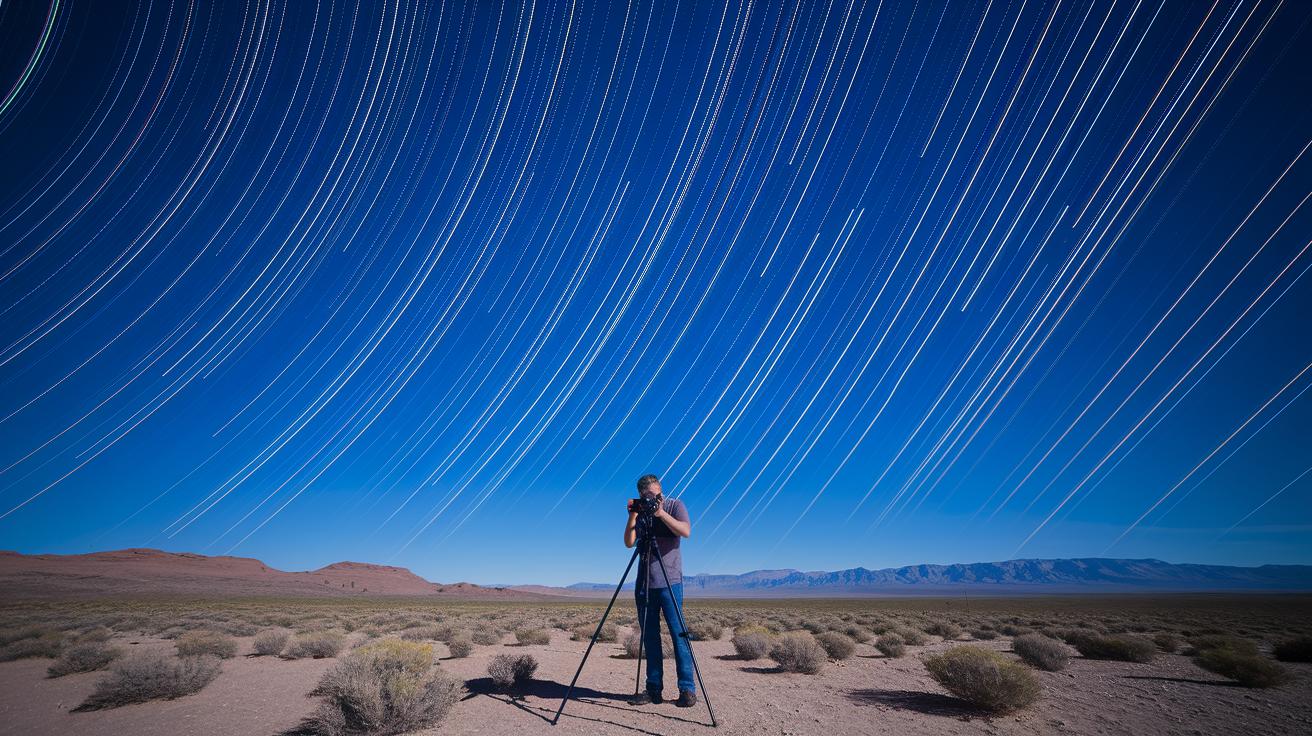
When shooting the night sky, you need fast lenses and sturdy gear to capture light quickly and hold steady during long exposures. Fast lenses let you use shorter shutter speeds to catch faint stars, while a strong tripod or tracker stops camera shake.
Wide-angle prime lenses give you a broad view, and star trackers help keep your shots sharp even during long exposures. For example, the Sigma 14 mm f/1.8 DG HSM Art gathers light fast, saving you time during fleeting celestial events. However, its heavy build and higher price tag may not fit every budget. Pairing this with reliable tripods or trackers will keep your images clear and detailed.
- Sigma 14 mm f/1.8 – Fast, wide-angle view for broad sky panoramas; heavy and expensive.
- Samyang/Rokinon XP 14 mm f/2.4 – Budget-friendly prime with solid performance; lacks weather sealing.
- Vanguard Alta Pro 263AB tripod – Weighs 2.4 kg with a 360° ball head, quick-release plate, and bubble levels for strong stability.
- Sky-Watcher Star Adventurer Mini – Portable star tracker that supports up to a 3 kg payload to counter Earth’s rotation.
- Remote shutter and various filters – Reduce vibration and help shape light for precise night sky photos.
Build a kit that fits your shooting style and the conditions you face. With the right gear, your DSLR can capture clear, detailed images of the cosmos every time.
DSLR Settings and Techniques for Capturing the Night Sky
Start with the basics. Open your aperture wide to let in lots of light. Set your ISO high enough to catch faint stars but low enough to keep images clean. Try using an aperture of f/2.8, an ISO between 1600 and 3200, and a 20-second shutter speed to kick off your night shots.
Next, focus carefully. Use live-view mode to zoom in on a bright star or planet. Adjust the focus manually until the star looks sharp. This helps prevent blurry images that can come from slow autofocus in the dark.
Then, add filters and stacking to your process. Removing the built-in IR-cut filter improves your capture of red light, which is key for nebulae. You can also attach an Astronomik 12 nm Ha filter on a Canon T3i to pick out specific colors in narrowband work. Take several shots with the same settings. Later, you can stack these images to lower noise and bring out more detail.
Finally, refine your photos with post-capture techniques. Use dark-frame and bias-frame calibration to clean up your image. Stacking software can merge multiple photos into one, revealing deep-sky features and a balanced view of the landscape.
Modifying and Fine-Tuning DSLRs for Astro Shoots
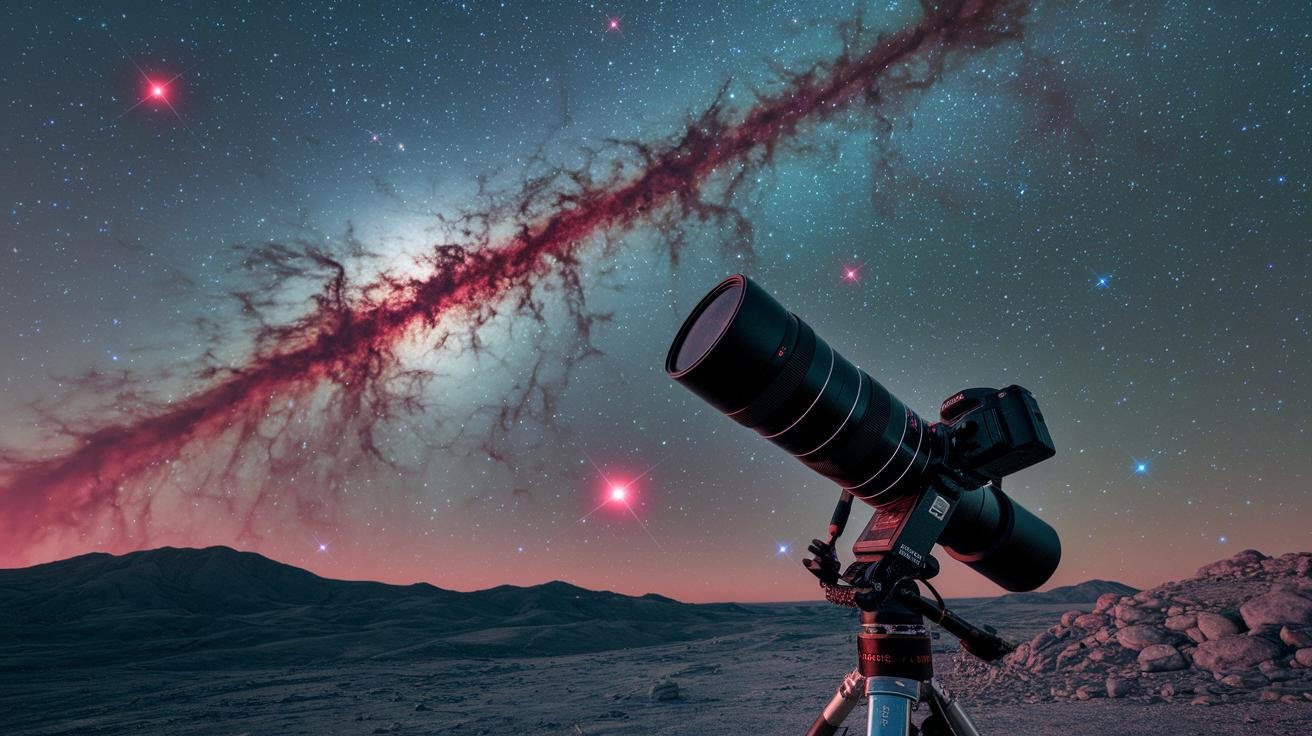
Start by making simple physical changes that boost your DSLR for deep-sky imaging. Many astro photographers remove the built-in IR-cut filter to let in more red wavelengths (the part of light that helps capture nebulae and faint stars). This trick can reveal details that normally stay hidden.
You can also attach your DSLR to a telescope for better alignment. Use a T-Ring adapter, such as the one made for Canon (Celestron 93419) or Nikon (93402), to secure your camera. One photographer even said, "Removing that filter made my deep-sky shots reveal more detail than ever."
Next, try using special filters. The Hoya Starscape Light Pollution Cut Filter, for example, cuts down on streetlight color casts without adding bulk. This helps reduce unwanted background light and brings out sharper, more vivid star images.
Finally, work on your post-processing. Start by capturing dark frames (to reduce sensor noise) and bias frames, then stack several exposures to further lower noise. Adjust the brightness, contrast, and color tone to enhance every detail from your shoot.
Final Words
In the action, we compared top DSLR models, breaking down key specs like sensor size, ISO range, and astro modes. We examined choices across various budgets and highlighted must-have accessories and settings for star imaging. We also touched on tweaks and workflows to improve your stellar shots. This guide offers clear insights and practical advice to help you pick the best dslr cameras for astrophotography. Enjoy the process and happy shooting under the night sky!
FAQ
Q: What are the best DSLR cameras for astrophotography for both Reddit and beginners?
A: The best DSLR cameras for astrophotography, as highlighted on Reddit and favored by beginners, are the Canon Rebel T7i and Nikon D850, known for user-friendly controls and strong low-light performance.
Q: What is the best cheap camera for astrophotography?
A: The best cheap camera for astrophotography is the Canon Rebel T7i, which is available used around $250, offering solid entry-level performance and low-light capability for starters.
Q: Which DSLR is best for astrophotography?
A: The DSLR best for astrophotography is often the Nikon D850, featuring a 45.7 MP sensor and high ISO range that delivers outstanding detail even in low-light celestial shots.
Q: What are the options for mirrorless cameras in astrophotography?
A: The best mirrorless cameras for astrophotography combine full-frame sensors and advanced low-light features, making them attractive for capturing the night sky with portability and clear images.
Q: What is an astrophotography telescope camera?
A: An astrophotography telescope camera is a device adapted to attach to a telescope, allowing users to capture detailed images of stars and deep-sky objects with enhanced clarity.
Q: What is the 400 rule in astrophotography?
A: The 400 rule in astrophotography suggests setting the maximum shutter speed by dividing 400 by the focal length, which helps minimize star trails for clearer long-exposure images.
Q: What’s the best camera for astrophotography overall?
A: The best camera for astrophotography overall depends on your needs, but high-end models like the Pentax K-3 Mark III offer specialized astro modes and rugged builds for excellent night sky imaging.