Ever wonder if your camera truly captures your best work? Imagine freezing a hummingbird in mid-flight with clear detail and bright colors. Top professional DSLRs like the Nikon D850 and Canon EOS 5D Mark IV deliver high resolution and fast autofocus (quick focusing). We reviewed the best models so you can see which gear makes the most difference. This guide will help you choose a camera that meets the high demands of professional photography and lets your creativity soar.
Top Professional DSLR Cameras for Advanced Photography
The Nikon D850 impresses with its 45.7 MP full-frame sensor. Although it launched in August 2017, it still delivers excellent image quality with great detail. New models cost about $2,500, while used ones run around $1,600.
The Canon EOS 5D Mark IV uses a 30.4 MP sensor and Dual Pixel autofocus (a system that quickly focuses on moving subjects). This makes it a smart pick for pros who need steady, sharp shots. Other top performers include the Nikon D5 and Canon 1DX Mark II. You can find the Nikon D5 used for roughly $1,500 to $2,000 and the Canon 1DX Mark II around $1,300. These cameras let you capture fast-moving scenes with precision – think of freezing a hummingbird mid-flight.
Pentax options like the K-1 II and K-3 Mark III offer strong support and flexible designs for both full-frame and APS-C shooters. Plus, models such as the Nikon D780 and D810 stand out in the used market for under $800, making full-frame quality more accessible.
For APS-C fans, the Nikon D500 is a top choice. It records 4K video and lets you take over 1,200 shots on a single battery charge. Its sibling, the Nikon D7500, offers a similar feel for quick shooting. Canon also joins the list with the 6D Mark II and 7D Mark II. The 6D Mark II is loved for its full-frame Dual Pixel autofocus, while the 7D Mark II is built for dedicated APS-C work.
Pros and cons bullet list:
- Pros: High resolution; reliable autofocus.
- Cons: Older models may lack newer technological advancements.
Professional DSLR Camera Sensor and Image Quality Insights
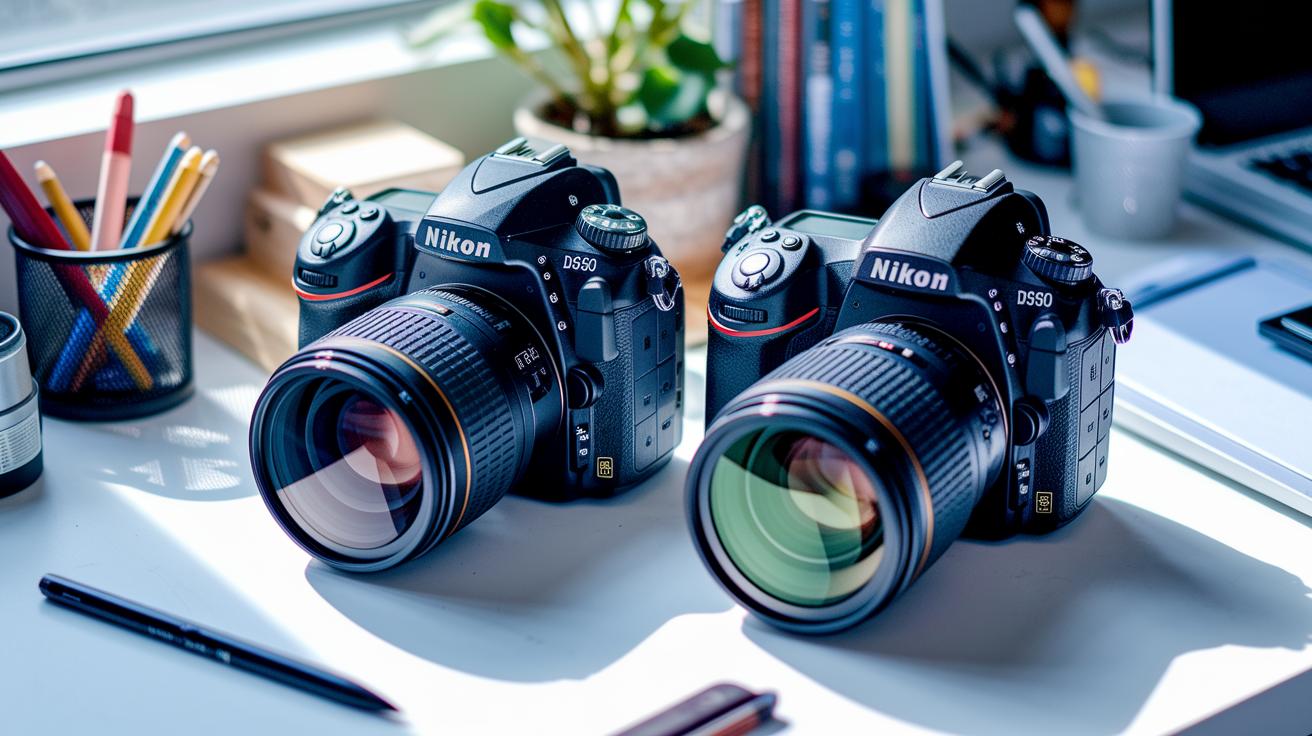
Professional DSLR cameras use cutting-edge sensors to capture amazing images. For instance, the Nikon D850 has a 45.7 MP full-frame sensor that delivers 14.8 stops of dynamic range (which shows how well it captures both light and dark areas) at ISO 64–25,600, and you can even push it to ISO 102,400. A shot from the D850 keeps detail in both bright skies and deep shadows.
The Nikon D780 sports a 24.5 MP sensor that produces clean images even at ISO 12,800, making it a solid option in low-light conditions. Meanwhile, the D810 features a 36.3 MP sensor that excels at capturing fine details at ISO levels from 800 to 6,400. The Nikon D500, with its 20.9 MP APS-C sensor (a smaller sensor suited for rapid shooting), handles ISO up to 51,200 without adding too much noise.
Other models, like the Canon 6D Mark II, come with a 26.2 MP full-frame sensor that offers true-to-life colors and a balanced mid-range dynamic range. Every sensor is built for a specific shooting style. This means that photographers get high-resolution images, reliable ISO performance, and excellent detail even in tricky lighting.
These sensor details help experts choose cameras that deliver vibrant pictures and lifelike colors. The differences allow photographers to pick gear that fits their needs perfectly, whether they work in a studio or tackle fast-paced outdoor scenes. In the end, precise sensor performance drives the choices made in every professional shoot, leading to unmatched creative results.
Professional DSLR Controls and SLR Shooting Techniques
Professional DSLR controls help you adjust every setting with care. Optical viewfinders show you the entire scene with no delay, which means what you see is what you get. Built-in dials for shutter speed, aperture (the opening that controls light), and ISO (the sensor's light sensitivity) let you quickly change exposure when lighting is unpredictable. For example, the Nikon D850 uses a 153-point autofocus system that quickly locks on to moving subjects, while the Canon EOS 5D Mark IV uses a 61-point system for steady tracking. One photographer said, "Adjusting settings on the fly saved me a critical shot during a fast-paced sports event."
Customizable autofocus-area modes help speed up focus shifts in fast-action scenes. Continuous shooting modes let you capture many photos quickly, with 7 fps on the 5D Mark IV and 10 fps on the Nikon D500, you won’t miss a moment in sports or wildlife photography. The expert layout and manual controls make it easier to master manual mode and get the best exposure. With these advanced settings and clear controls, you can consistently capture well-exposed images even when the subject or lighting changes fast, ensuring professional quality every time.
Professional DSLR Lens Compatibility and Accessory Integration
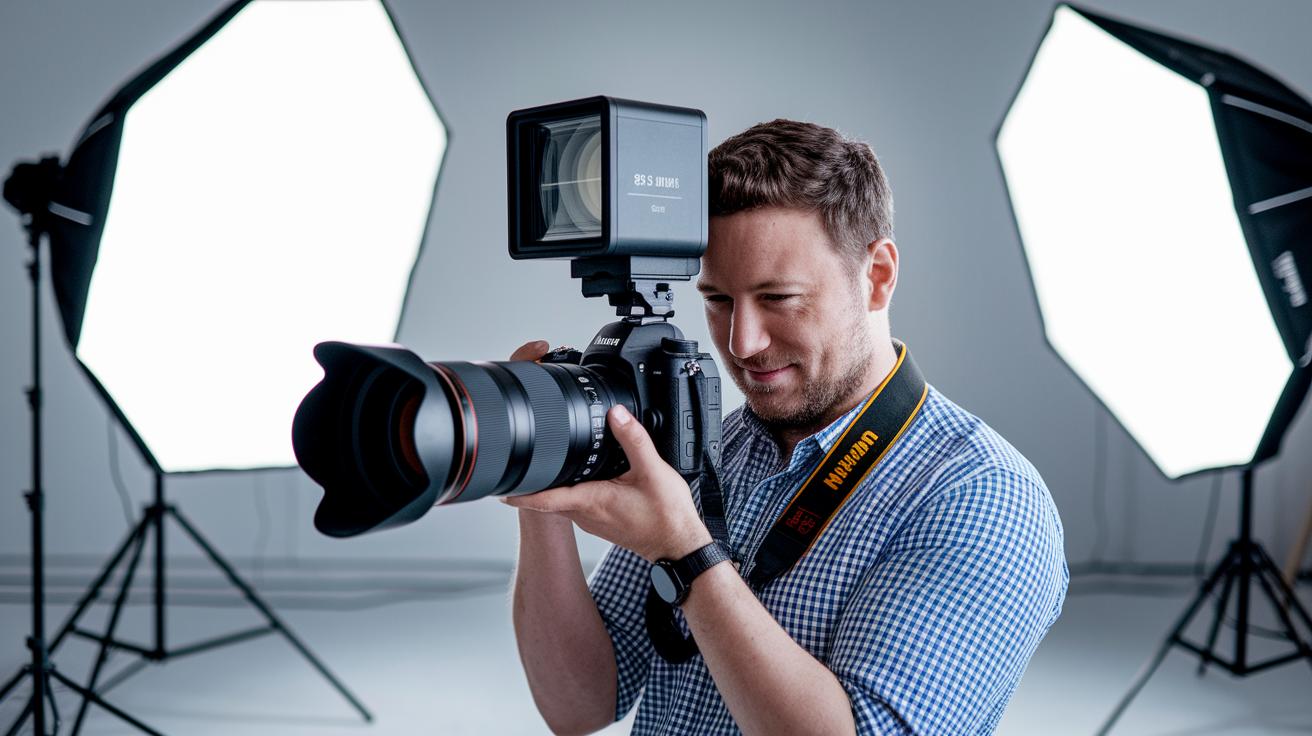
Getting the best shot means pairing your pro camera with the right lens and flash unit. Nikon cameras with the F-mount work with over 300 lenses. You can choose a pro-grade prime like the 85 mm f/1.4 or a versatile zoom such as the 24–70 mm f/2.8. Canon users enjoy the EF mount, which offers high-end L-series lenses like the 50 mm f/1.2 for crisp portraits along with rapid zooms like the 70–200 mm f/2.8. Pentax, with its robust K-mount, provides weather-sealed primes and zooms built to handle tough conditions.
Pro DSLRs also pair best with advanced external flash units. For example, the Canon 600EX II and Nikon SB-5000 feature TTL flash control (which adjusts the flash automatically) and high-speed sync for quick shooting. This setup helps deliver balanced lighting and sharp exposure, keeping pace with your creative flow.
Professional DSLR Cameras: Elite Gear for Experts
Professional DSLR cameras are built for tough, long days of shooting. Top models like the Nikon D850, Nikon D5, and Nikon D500 use a strong magnesium-alloy body and weather sealing to protect them in harsh conditions. They have an easy-to-hold design that helps reduce fatigue when using heavy lenses. These cameras can take a beating from bumps and drops while still giving clear, reliable images on every shoot.
Battery life is very important during long sessions. The Nikon D5 can take about 3,780 shots on a full charge, the D850 around 1,840, and the D500 more than 1,200. Their shutters are tested to 200,000 or more clicks, so they are ready for heavy daily use. Real tests and user feedback show that these cameras are a solid choice for professionals who need gear that can handle tough, real-life shooting conditions.
Professional DSLR Cameras Price and Value Comparison

Buying a DSLR is about more than just the price tag. Trade-in programs help cut costs by 20 to 30%, letting you upgrade without a huge expense. Many brands offer deals that make it easier to boost your gear's performance with new features.
Market trends are shifting how we judge long-term value. New mirrorless cameras, like the Nikon Z6 III, feature advanced options that now affect the resale price of older DSLRs. When choosing a new camera or an upgrade, it’s wise to compare these innovations along with overall cost.
It's important to weigh both price and performance. Look beyond just the new or used price. Consider trade-in deals and the chance to upgrade in the future. In everyday terms, trading in an old DSLR for a mirrorless model with better features could give you a good return on your investment.
For instance, a photographer might recover nearly 30% of the upgrade cost through manufacturer trade-ins, making a pricey new camera a more sensible long-term investment.
Final Words
In the action, we covered top models, sensor performance, precise controls, and robust build quality. We weighed pricing and lens compatibility so you know which model ticks all the boxes for pro-level work.
We broke down key features to help you choose a camera that delivers real-world performance and durability. This guide ensures you can make a confident, low-risk decision with professional dslr cameras built for tough shooting days. Enjoy the journey ahead with clear choices and expert insights.
FAQ
Frequently Asked Questions
Q: What are the best professional DSLR cameras for beginners?
A: The best professional DSLR cameras for beginners offer a solid mix of ease-of-use and advanced features. They provide a gentle learning curve, as seen with models like the Nikon D3500, which help users grow into pro photography.
Q: What is the best DSLR camera for professional photography and videography?
A: The best DSLR camera for professional photography and videography blends high resolution with strong video features. Models such as the Canon EOS 5D Mark IV deliver excellent stills and video performance with reliable autofocus.
Q: What does the Canon professional cameras list include?
A: The Canon professional cameras list features flagship models like the Canon EOS 5D Mark IV, known for its impressive image quality and reliable autofocus, making it a trusted option for pros.
Q: What camera do most professional photographers use, and what camera does Taylor Swift use?
A: Most professional photographers choose reliable models like Canon EOS 5D Mark IV or top Nikon options. Reports suggest that celebrities such as Taylor Swift also favor trusted gear for high-quality results.
Q: Why is the DSLR format being phased out?
A: The DSLR format is being phased out mainly as mirrorless cameras offer faster performance, improved video capabilities, and more compact designs, all while maintaining excellent image quality.
Q: What are some notable models like the Nikon D7500, D850, D780, D6, Nikon D3500, and Canon EOS 5D Mark IV?
A: Notable models include the Nikon D850 with 45.7 MP for high detailed images, the D780 tailored for both video and stills, the capable APS-C D7500, flagship Nikon D6, entry-level Nikon D3500, and Canon EOS 5D Mark IV known for professional performance.