Have you been thinking about whether a DSLR camera is a smart buy? This guide will help you pick the right one based on your shooting style and budget. We break down key features like sensor size (the part that captures the image), grip comfort, and battery life so you can choose what works best, whether you're into fast sports or detailed landscapes. With a live optical viewfinder and options for upgrades, DSLRs deliver a mix of precision and performance. Read on for practical tips to make a smart, informed choice for your photography needs.
How to Choose a DSLR Camera: Step-by-Step Guide
DSLR cameras have a built-in mirror that sends light through the lens to an optical viewfinder. This gives you a live view of your subject. They come with long battery life and a grip that feels solid and comfortable during long shoots. Plus, you can start with one lens kit and add more lenses as you learn.
Before you decide, think about how you shoot and what you can spend. Do you capture fast sports or detailed landscapes? If you need quick autofocus or a camera that handles low light (high-ISO performance), your choice will change. Entry-level models start at around $400, while high-end cameras can cost over $3,000. It is best to set your priorities early on.
Other key points to consider are the sensor size and how the camera feels in your hand. A larger sensor usually means better clarity and dynamic range. Also, make sure the controls match your shooting style and that you can upgrade lenses later. Taking the time to balance your needs and budget will help you choose a camera that fits your creative goals and daily use.
DSLR Sensor Comparison: APS-C vs Full-Frame Performance
When choosing a DSLR, sensor size is a key factor. APS-C sensors are smaller and help keep costs low. They have a 1.5× crop factor (meaning the sensor crops the image by 1.5 times). They work well for everyday photos, especially if you’re on a budget. Keep in mind that some entry-level APS-C models can show more noise (grain) when you use ISO settings above 800.
Full-frame sensors are larger and offer more detail. They usually have between 24 and 45 megapixels, which is great for big prints and heavy cropping. Their size also improves dynamic range (the difference between the lightest and darkest parts) and low-light performance. Full-frame sensors can keep images clean at ISO levels up to 6400. That makes them a strong choice for pros and advanced users who demand sharp details in every shot.
| Sensor Type | Sensor Size / Crop Factor | Resolution Range | ISO Performance |
|---|---|---|---|
| APS-C | Smaller (1.5× crop) | Typically 16–24 MP | Clean up to ISO 800; noise may increase beyond |
| Full-Frame | Larger sensor | 24–45 MP | Clean images up to ISO 6400 |
Lens Mount Compatibility and Kit Options for Your DSLR
Your DSLR's lens mount is key to finding the right lenses. Canon EF and Nikon F mounts are the most popular picks. They give you access to both native lenses and many third-party options. This lets you upgrade slowly or mix different lenses as your skills grow. A good lens mount also boosts resale value and keeps your options open if you decide to use DSLR lenses on a mirrorless camera later.
When weighing kit zooms against prime lenses, each option has its pros and cons. Kit zooms, often in the 18–55 mm range, are built for everyday use and offer a simple all-in-one solution. In contrast, a 50 mm f/1.8 prime lens delivers sharper images and handles low light better. However, its fixed focal length means you might need to add another lens for more variety.
Advantages of kit zooms:
- Broad focal range for general shooting
Disadvantages of kit zooms:
- Slower apertures that can limit low-light performance
Prime lens benefits:
- Better sharpness and low-light capability
- Fixed focal length may require additional lenses for different shots
Canon vs Nikon Showdown in DSLR Camera Buying
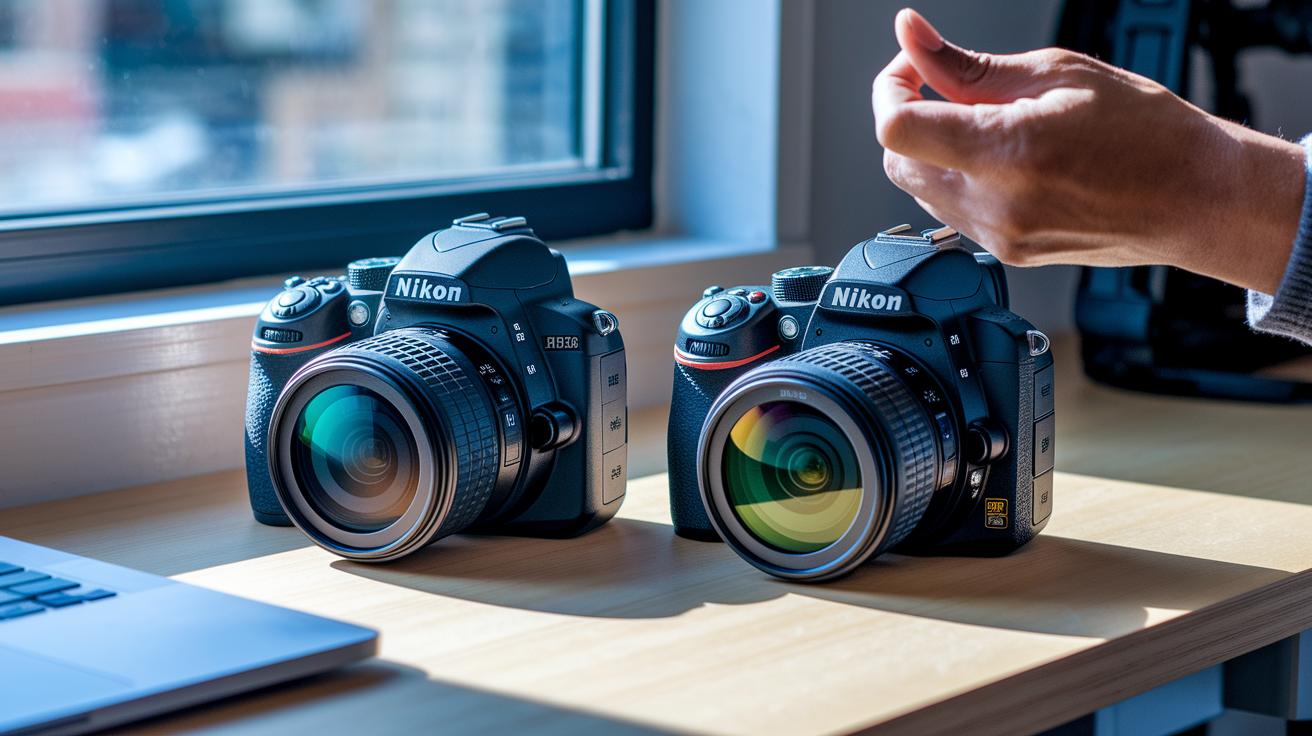
Canon and Nikon each bring their own strengths to the table to match different shooting styles and budgets.
Nikon Strengths: sensor tech, high-ISO performance, grip comfort
Nikon is known for its strong sensor technology. The Nikon D3500 has a 24 MP APS-C sensor that is great for beginners. Its simple controls and good image quality at low ISO settings make it a solid choice. For seasoned photographers, the Nikon D850 offers a 45.7 MP full-frame sensor. This camera gives sharp images even in low-light scenes. Nikon cameras are also praised for their firm grip and easy-to-follow layout, which helps during long shooting sessions.
Canon Strengths: compact bodies, touchscreen interfaces, video capabilities
Canon focuses on lightweight designs that work well for travel or everyday shooting. The Canon EOS 250D is very light and supports impressive 4K video recording. The Canon EOS 90D features a 32.5 MP APS-C sensor that balances high resolution with fast performance. Canon cameras use touchscreen menus and clear controls, which speed up setup and adjustments in the field. Many video fans value Canon for its consistent video quality.
When choosing your camera, think about what matters most to you. Pick Nikon if you need detailed sensors and strong performance in low light. Go with Canon if a lightweight design and great video features are your top priorities.
Top DSLR Models by Category for Every Budget
We compared many DSLRs by looking at how they perform, their cost, and their special features. Some cameras are perfect for beginners with a simple, reliable setup. Others suit enthusiasts who need high resolution and smart autofocus systems. Each camera was picked for its strong points in everyday photography, travel, sports, black-and-white work, or professional use. For example, the Nikon D3500 is a great choice for new users thanks to its easy-to-use design. The table below gives you a quick look at the top models, with details like sensor type, a key feature, and price.
| Model | Category | Sensor | Key Feature | Price |
|---|---|---|---|---|
| Nikon D850 | Best Overall | Full-Frame | Superb resolution and high ISO performance | $2,800 |
| Nikon D3500 | Best Beginner | APS-C | User-friendly design for daily use | $500 |
| Canon EOS 250D | Best Lightweight | APS-C | Compact build with 4K video | $600 |
| Canon EOS 850D | Best Travel | APS-C | Versatile autofocus and high-speed shooting | $900 |
| Canon EOS 90D | Enthusiast APS-C | APS-C | High resolution with fast performance | $1,200 |
| Pentax K-3 III Monochrome | Black & White | APS-C | Specialized sensor for monochrome excellence | Varies |
| Nikon D500 | Sports | APS-C | Rapid autofocus and burst shooting | Varies |
| Pentax K-1 II | Value Full-Frame | Full-Frame | Affordable with robust features | Varies |
| Nikon D780 | Mid-Range Full-Frame | Full-Frame | Balanced performance and image quality | Varies |
| Canon EOS 5D Mark IV | Professional | Full-Frame | Advanced features and durable build | Varies |
| Canon EOS 5D Mark III | Budget Full-Frame | Full-Frame | Reliable performance at a lower cost | Varies |
Buying Tips: New vs Used and Deal Strategies for DSLR Cameras
When buying a used DSLR, checking its condition is key. Used cameras can save you 20-50% over a new model. Look carefully for signs of wear or damage and confirm if the warranty can transfer. One important check is the shutter count (the number of times the camera's shutter has been activated). A count under 50,000 usually means the camera is in good shape. Also, test all accessories to avoid unexpected repair costs and ensure reliable performance.
Buying at the right time can save you even more money. Big sales like Black Friday and holiday bundles often drop new kit prices a lot. When buying a new DSLR, compare return policies from online retailers and local shops. Trade-in offers can also help lower your costs by offsetting your upgrade spend. Check the seller’s reputation and read customer feedback to balance price and reliability.
Key buying tips:
- Check the camera’s condition by looking at the shutter count, warranty status, and accessories.
- Compare rebate programs and return policies from different sellers.
- Look for trade-in offers during seasonal sales to reduce your upgrade costs.
Final DSLR Purchase Checklist and Decision-Making Framework
This quick guide pulls together key points and fresh insights to help you pick the right DSLR for your needs. It covers goals like what you plan to shoot, your budget, sensor type, lens mount, autofocus, ISO range, battery life, and ergonomics, while adding extra factors for a complete picture.
Think about your main needs and add a few advanced checks. Compare repair costs and warranty extensions to see what you might face down the road. Look at real user reviews as they can reveal how reliable a camera is. One reviewer mentioned, "My camera only needed one service visit in 3 years, saving me time and money." This kind of feedback can be very useful when planning ahead.
This guide is a handy wrap-up to help confirm your final choice. By mixing the core features with these extra tips, you'll feel more confident in choosing a DSLR that fits both your creative goals and long-term care needs.
Final Words
In the action, we examined DSLR basics, sensor comparisons, and lens mount choices alongside a Canon versus Nikon showdown. We broke down shooting styles, budget limits, and highlighted top models by category.
We also shared deal tips and a final checklist to nail your purchase decision.
This dslr camera buying guide offers a clear, hands-on framework to select a DSLR that fits your needs. Enjoy capturing great photos and feel confident with your choice!