Nintendo Handheld Consoles: Classic Portable Joy
Since 1989, Nintendo has put gaming right in our hands. The journey started with the original Game Boy and moved on to devices like the Nintendo 3DS. Each console brought its own twist while keeping the fun and charm of handheld play.
Over the years, Nintendo handhelds have changed a lot. They may look different now, but they still bring that simple, exciting gaming experience we love. Whether you grew up with them or are trying one for the first time, these gadgets show why portable gaming remains a favorite for all ages.
These devices remind us that great games don't need flashy graphics, just smart, playful design. Their evolution is a clear sign that even with new tech, the magic of Nintendo’s classic fun endures.
Overview & Historical Evolution of Nintendo Handheld Consoles
Back in 1989, Nintendo changed portable gaming with the first Game Boy. This compact device had a single-color screen and played games from cartridges, making it easy to take gaming anywhere. Its simple design and huge game library set the course for all future Nintendo handhelds.
In 1995, Nintendo tried a new idea with the Virtual Boy. It featured a 3D effect (stereoscopic display) that gave games a sense of depth. However, users soon experienced eye strain and dizziness. Selling around 770,000 units in its first year, the Virtual Boy was a bold experiment that showed how important comfort is when gaming on the go.
Three years later, in 1998, Nintendo introduced the Game Boy Color. With a bright color screen (TFT display), a faster processor, and more memory, it brought a fresh look to portable gaming. You could still play older Game Boy games, even though it ran down the battery faster. This upgrade helped Nintendo stay on top in portable gaming.
The Game Boy Advance came in 2001 with a 32-bit processor that improved graphics and colors. It sold over 81.5 million units around the world. In 2003, Nintendo refined this design with the Game Boy Advance SP. Its clamshell design (like a flip phone) and front-lit screen made it easier to play anytime, anywhere.
Then in 2004, Nintendo launched the DS. It featured two screens, one of which was a touchscreen, and offered wireless play. Selling over 154 million units, the DS won gamers over with its fun design and new interactive features.
In 2011, Nintendo unveiled the 3DS, which delivered 3D effects without the need for glasses. With later versions like the XL and 2DS, it sold about 75 million units and pushed the limits of what a handheld console could do.
For more details, check out our overview on classic handheld game consoles.
Technical Specifications Comparison of Nintendo Handheld Consoles
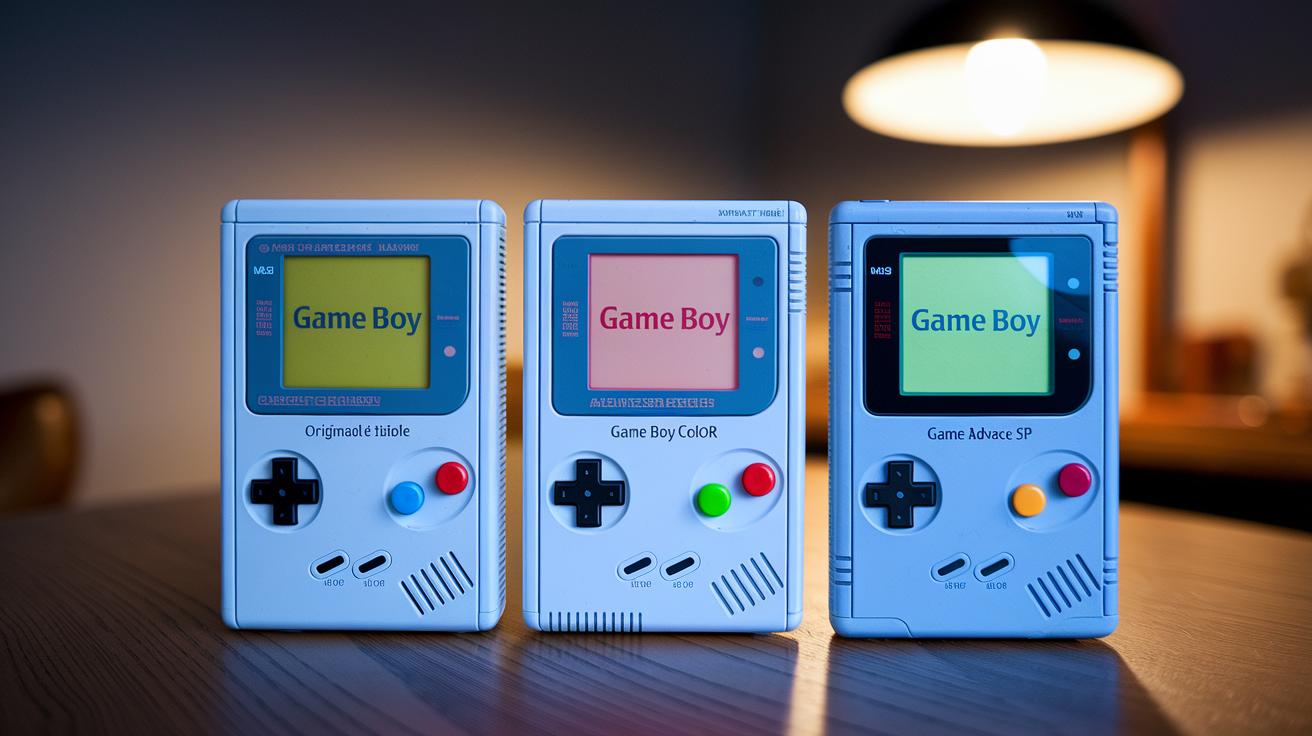
| Console | CPU Speed | Screen Type | Battery Life | Special Features |
|---|---|---|---|---|
| Original Game Boy | 4.19 MHz | 2-bit Monochrome | 15–30 hours | Cartridge-based design |
| Game Boy Color | Improved over 4.19 MHz | TFT Color Display | 5–8 hours | Backward compatible with Game Boy cartridges |
| Game Boy Advance SP | 16.78 MHz | Front-lit LCD | Rechargeable pack (varies with use) | Clamshell design for portability |
| Nintendo DS | Custom processor | Dual Screens (one touchscreen) | 10–14 hours | Wireless connectivity and dual-screen play |
| Nintendo 3DS | Enhanced custom CPU | Glasses-free 3D (autostereoscopic) | 3–5 hours | SD card support and improved 3D effects |
Each handheld shows a clear step forward in design and tech. The Original Game Boy used a 4.19 MHz processor and a simple 2-bit screen that helped start portable gaming.
The Game Boy Color brought in a brighter TFT display and faster speed, but it meant a shorter battery run of 5–8 hours. With the Game Boy Advance SP, the 16.78 MHz chip and front-lit screen provided better visuals, while its clamshell shape made it easy to carry.
The Nintendo DS moved things ahead with two screens, including a responsive touchscreen for quick play. Its built-in wireless lets you play with friends, and the battery lasts about 10–14 hours.
Lastly, the Nintendo 3DS introduced glasses-free 3D gaming. Even though it only lasts 3–5 hours per charge, its SD card support and enhanced visuals changed the way we play on the go.
Game Libraries Across Nintendo Handheld Consoles
Nintendo’s handheld consoles have always had a wide mix of games for every kind of player. The original Game Boy made its mark with favorites like Pokémon Red & Blue and Tetris. In fact, Pokémon Red & Blue sold 31 million copies, proving its huge appeal.
The Game Boy Color stepped up the game with brighter visuals and titles such as Pokémon Gold & Silver and Super Mario Bros. Deluxe. It let players dive into colorful new worlds while still keeping a hint of the classic style.
The Game Boy Advance added even more variety with hits like Pokémon Ruby & Sapphire and Mario Kart: Super Circuit. These games boosted graphics and gameplay, pleasing both longtime fans and newcomers.
The Nintendo DS brought fresh ideas with games like Grand Theft Auto: Chinatown Wars, the puzzling adventures of Professor Layton, and the courtroom drama of Ace Attorney. With such a range of titles, there was something for everyone.
The Nintendo 3DS added a cool twist by offering glasses-free 3D gaming. Standout games like The Legend of Zelda: Ocarina of Time 3D, Animal Crossing: New Leaf, and Pokémon X & Y created deep, immersive worlds that showed off the console’s unique display.
| Console | Popular Titles |
|---|---|
| Game Boy | Pokémon Red & Blue, Tetris |
| Game Boy Color | Pokémon Gold & Silver, Super Mario Bros. Deluxe |
| Game Boy Advance | Pokémon Ruby & Sapphire, Mario Kart: Super Circuit |
| Nintendo DS and 3DS | Grand Theft Auto: Chinatown Wars, Professor Layton, Ace Attorney, The Legend of Zelda: Ocarina of Time 3D, Animal Crossing: New Leaf, Pokémon X & Y |
Collector’s Guide to Vintage Nintendo Handheld Consoles
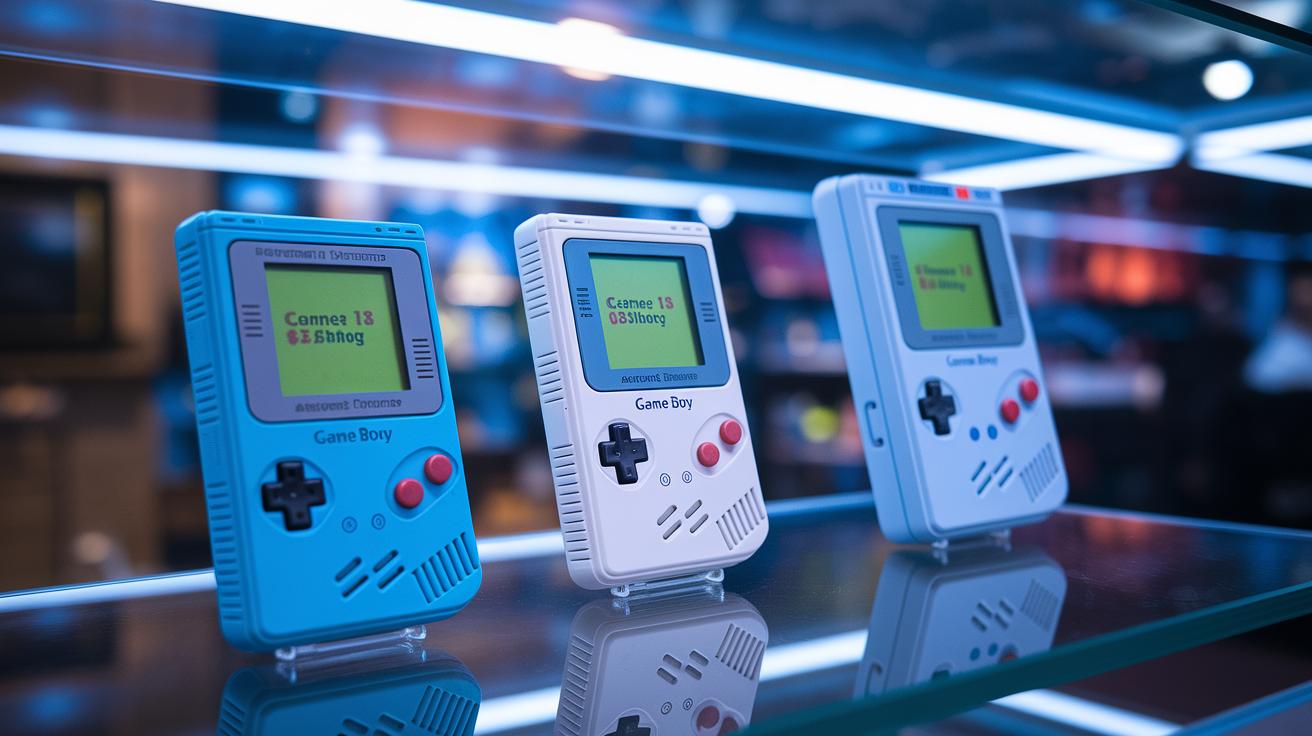
Collectors love finding devices that stand out because of unique designs and rare production numbers. The Game Boy Micro (2005) is a top pick due to its tiny size. Its compact design and sleek metal finish make it a stylish option for anyone who values both form and function.
The Game Boy Advance SP (2003) is also very popular. Its flip design and built-in rechargeable battery have kept fans happy over the years. When checking a GBA SP, make sure the front-lit screen works well and that the clamshell mechanism moves smoothly. A unit in great shape can earn a higher resale price.
The Virtual Boy is rare because it was made in limited numbers. Although its 3D display was not comfortable for everyone, a Virtual Boy in mint condition can sell for over $200. Always look for any hardware damage or discoloration that might lower its value.
On the other hand, the Game Boy Color is more common due to mass production. Prices often average around $30. If you are considering one, check that the cartridge slot is intact, the battery still works properly, and there is minimal screen glare or fading.
Collector tips:
- Check overall cosmetic condition.
- Verify that the screen is clear and the battery is functional.
- Look for original packaging and manuals.
Choosing the Best Nintendo Handheld Console for Your Needs
When picking a handheld console, performance is a key factor. The Nintendo DS stands out with its dual-screen design and proven gameplay, selling over 154 million units. Its clever features still set the benchmark for portable gaming. If you value steady performance and a huge game library, the DS is a solid choice.
Comparing the DS with the 3DS is important. The 3DS New XL brings a faster CPU, more RAM, and extra shoulder buttons that help with quick, precise controls. You can notice smoother transitions in fast games. However, the 3DS usually has a shorter battery life than the DS. Think about how long you plan to play without a charger.
If long battery life is your top priority over raw speed, the Game Boy Advance might be the best fit. It offers extended playtime, ideal for long commutes or travel. Meanwhile, the Switch 2 steps up with better graphics and clear visual improvements. Even though its resolution and performance are upgraded, many launch games were carried over from the older Nintendo Switch, which might not suit every gamer.
- DS: Offers a great dual-screen experience with proven playability.
- 3DS New XL: Provides faster processing and extra buttons but comes with reduced battery life.
- Game Boy Advance: Focuses on long battery life for extended gaming sessions.
- Switch 2: Boosts visual quality, though many games are re-releases.
Final Words
In the action, we traced Nintendo’s journey from the original Game Boy to today’s innovative handheld systems. We highlighted key milestones, compared specs like processor speed and battery life, and shared favorite game libraries. We even provided tips for collectors looking at vintage models. This clear look at nintendo handheld consoles helps you decide which device fits your play style and budget. Enjoy the blend of nostalgia and new tech, and may your next choice bring hours of fun.
FAQ
What is the timeline and history of Nintendo handheld consoles?
The timeline and history of Nintendo handheld consoles starts with the original Game Boy in 1989, followed by the Virtual Boy, Game Boy Color, Game Boy Advance, Nintendo DS series (including DS Lite), and the Nintendo 3DS revisions.
What is the best handheld console to get?
The best handheld console depends on your gaming needs. Many lean toward the Nintendo DS series for its dual screens and game library, while others appreciate the flexibility offered by the Nintendo Switch.
What are all the Nintendo handheld consoles?
All Nintendo handheld consoles include the original Game Boy, Virtual Boy, Game Boy Color, Game Boy Advance (with SP and Micro versions), Nintendo DS series (including DS Lite), Nintendo 3DS series, and the Nintendo Switch line.
Is it worth buying a Switch in 2025?
Buying a Switch in 2025 can be worthwhile if you enjoy its hybrid play and diverse game library. Stay alert to updates as new models or improvements may continue to enhance its value.
Is Switch better docked or handheld?
The Switch works well in both modes. Docked play offers better graphics on a TV, while handheld mode is perfect for gaming on the go and fits your active lifestyle.
What is the Nintendo Switch Lite?
The Nintendo Switch Lite is a smaller, handheld-only version that maintains core functionality while limiting play to portable mode, ideal for gamers who prioritize mobility above docked play.
What distinguishes the Nintendo Switch Lite Hyrule Edition?
The Nintendo Switch Lite Hyrule Edition features the same performance as the regular Lite but comes with exclusive design accents celebrating the Zelda theme, appealing to fans of the franchise.
What is the Nintendo DS Lite?
The Nintendo DS Lite refines the original DS with a slimmer form, brighter screens, and improved battery life, making it a popular choice for a more compact, enhanced dual-screen gaming experience.
What is the Steam Deck?
The Steam Deck is a handheld gaming PC that brings many of your favorite PC games on the go. It boasts a powerful processor and customizable settings to suit different gaming needs.
What is the PlayStation Portal?
The PlayStation Portal is a remote gaming screen that connects to your PlayStation console, letting you play your console games from another room or away from your TV with ease.
What is the Nintendo Switch?
The Nintendo Switch is a hybrid console offering both docked and handheld gameplay, providing a flexible option for enjoying a vast library of games whether at home or on the go.