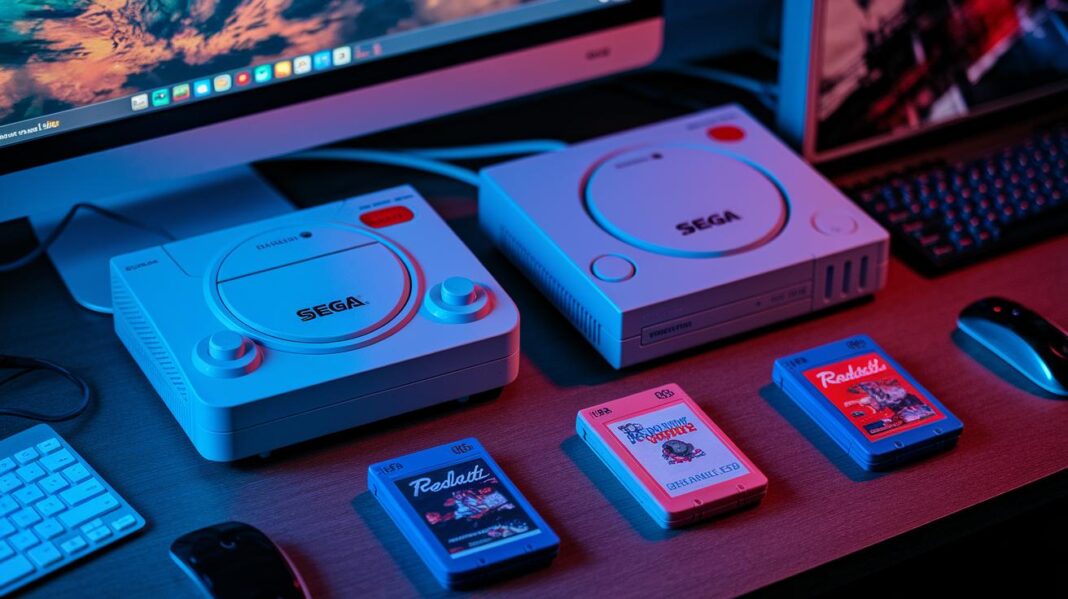
Ever wonder why Sega consoles still capture our hearts? From the original SG-1000 to the Dreamcast, each system changed how we game at home. Their bold looks and quick, fun gameplay made players remember every moment.
Sega shook up the industry with every release, proving that classic consoles can still create excitement today. In this post, we explain how these timeless devices continue to spark joy for gamers of all ages, blending the charm of the past with today's thrills.
Sega Console Overview: Timeline and Market Impact
Sega entered the home console market in July 1983 with the SG-1000 and its follow-up, the SG-1000 II. These early consoles used an NEC 780C processor (a take on the Zilog Z80A).
In October 1985, Sega launched the Mark III in Japan. It later became known as the Master System in North America. It featured a Zilog Z80A running at 4 MHz along with improved graphics and a redesigned controller.
The Genesis, also known as the Mega Drive, released in 1988. It ran on a Z80 at 3.58 MHz and introduced 16-bit graphics, which meant sharper images and more engaging gameplay for home users.
In 1991, Sega raised the bar with the Sega CD. This system used a Motorola 68000 at 12.5 MHz. The use of CD-ROMs helped expand its game library with more titles and richer content.
The 32X add-on came in 1994 as a boost for the Genesis. It included dual 32-bit cores that improved graphics and handled sprites better.
Later in 1994, Sega introduced the Saturn in Japan. It featured two Hitachi SH-2 processors running at 28.6 MHz and offered advanced 3D capabilities. The console made its way to North America in 1995.
Sega also dabbled in handheld gaming. The Pico arrived in 1993, aimed at educational play, while the Genesis Nomad hit the scene in 1995 as a portable version of the Genesis.
In 1998, Sega launched the Dreamcast. It was powered by a Hitachi SH-4 32-bit processor running at 200 MHz and marked the last of Sega’s cutting-edge hardware before shifting to third-party software. Sega’s legacy lives on in mini versions like the Genesis Mini (2019) and the Game Gear Micro (2020).
Early Sega Consoles: SG-1000 and Master System
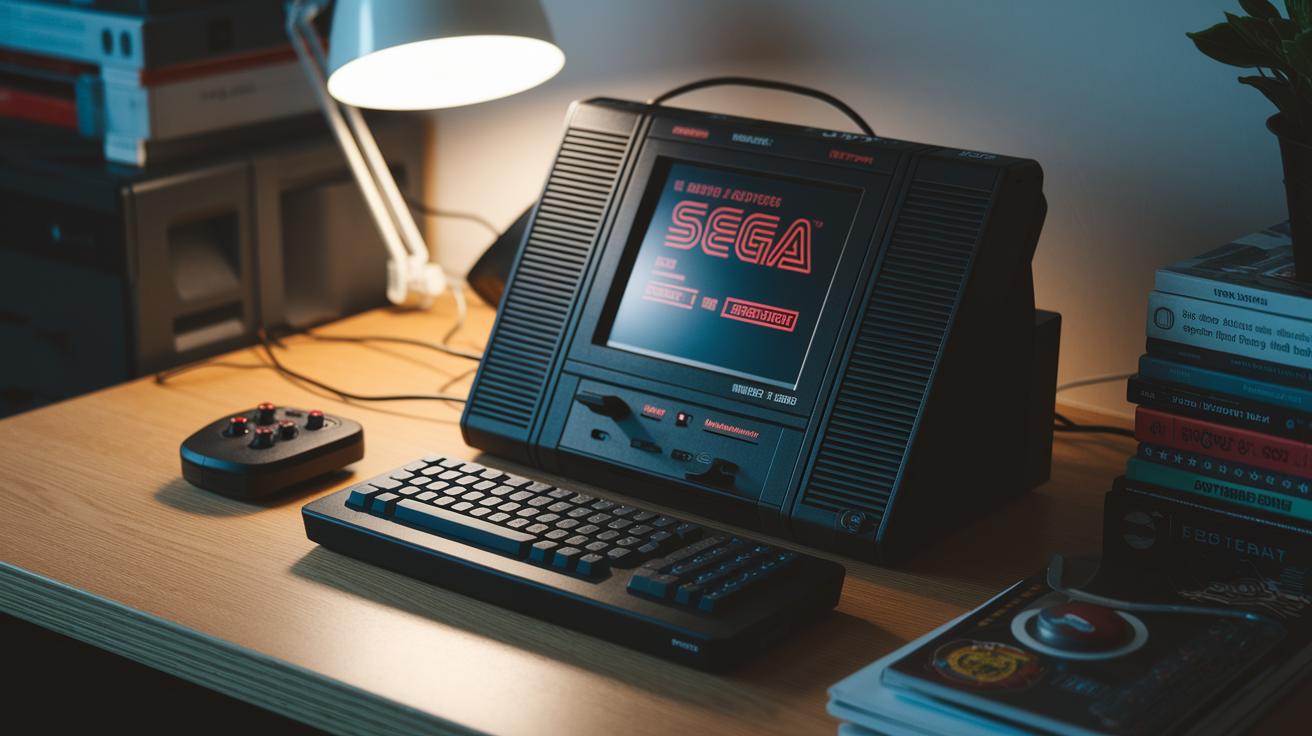
Sega kicked off its journey in home gaming with the SG-1000 in July 1983. This console ran on an NEC 780C processor (inspired by the Z80A) that delivered arcade-like performance and set the stage for future innovations. In 1984, they released the SG-1000 II, which featured detachable joypads that let players swap controllers for a more comfortable gaming experience, a smart early sign of design progress.
In October 1985, Sega launched the Mark III in Japan. It was later known as the Master System when it landed in North America in 1986. This console took on Nintendo’s Famicom with a Zilog Z80A CPU running at 4 MHz and offered better graphics. Sega used different launch strategies across regions, tweaking prices to attract both hardcore gamers and families.
Sega combined smart engineering with careful market moves. They adjusted features and costs to fit local tastes, while innovations like detachable controllers showed they were ready to lead in the competitive gaming scene.
| Console | Release Date | Processor | Unique Feature |
|---|---|---|---|
| SG-1000 | July 1983 | NEC 780C (Z80A-inspired) | Arcade-quality performance |
| SG-1000 II | 1984 | NEC 780C (Z80A-inspired) | Detachable joypads |
| Mark III / Master System | October 1985 (NA: 1986) | Zilog Z80A @ 4 MHz | Enhanced graphics and design |
Sega Genesis and Add-On Evolution
Developers took bold creative risks with add-ons. The Sega CD mixed game action with live-action video, shifting storytelling toward a richer, narrative style. In fact, its multimedia features sparked a new trend by blending full-motion video with interactive gameplay.
The 32X also pushed the visual limits. With improved sprite handling and deeper color ranges, studios built detailed backgrounds and dynamic action scenes. They combined standard gameplay with daring visual effects that still influence modern console design.
While rival systems delivered stable performance, Sega's add-ons opened doors for experimental design. Developers redesigned levels and embraced cinematic ideas that helped shape interactive storytelling.
| Device | Design Impact |
|---|---|
| Genesis | Set the stage for 16-bit design standards. |
| Sega CD | Promoted narrative experiments with multimedia. |
| 32X | Allowed advanced visual effects and improved sprite handling. |
Sega Saturn Hardware Features and Exclusive Titles
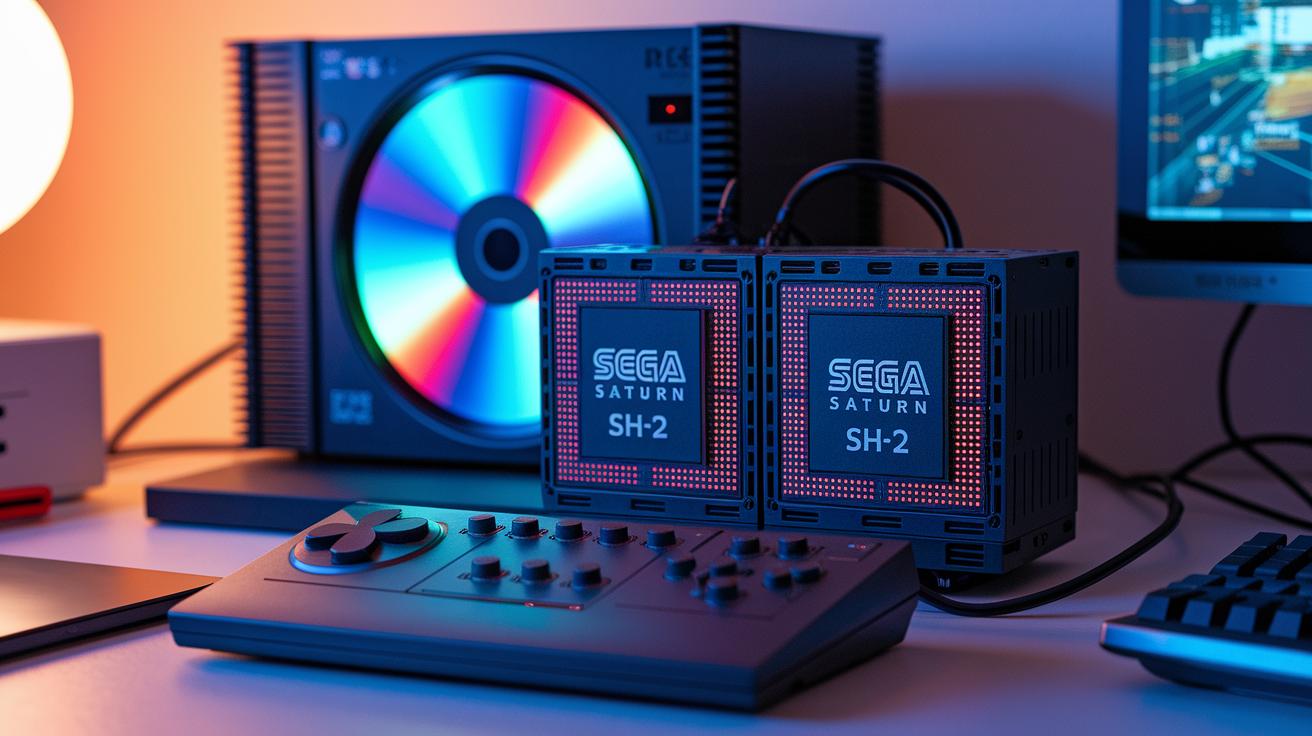
The Sega Saturn still stands out thanks to its two Hitachi SH-2 processors running at 28.6 MHz each. Gamers loved how these twin CPUs worked together to give smooth gameplay and better graphics. The console also used CD-ROM media, which allowed game makers to build complete worlds with rich sounds and visuals. Its polygon-based 3D acceleration made it possible for games to show complex shapes and lively scenes, creating a more interactive and exciting play experience.
Games like Panzer Dragoon set high standards with fast-paced action. NiGHTS into Dreams charmed players with its dreamy flying adventures, while Virtua Fighter 2 offered a refined fighting experience that tested speed and strategy. Each exclusive title brought unique design ideas and gameplay improvements that set the Saturn apart. Developers used its advanced hardware to create games that still spark joy among retro fans. For example, Panzer Dragoon impressed with smooth character movements and large, engaging levels. The Saturn’s innovative technology and impressive game library remind us why it remains a beloved console.
Sega Dreamcast: Innovations and Market Decline
The Sega Dreamcast changed the gaming scene with fresh ideas. It launched in Japan on November 27, 1998 and in North America in September 1999. The console used a Hitachi SH-4 processor at 200 MHz and came with a Visual Memory Unit (VMU). This mini screen and storage device let you check game stats and play simple games even when the console was off. It also featured a built-in 56 kbps modem that paved the way for online gaming long before broadband hit the scene.
At launch, 18 titles were available, offering a mix of fast-paced shooters and creative sports games.
Its online features let players connect beyond local play, so you could challenge friends over the internet, a breakthrough for its time. Developers loved the Dreamcast and built exclusive game series with unique stories and interactive gameplay. The fast processing and dynamic graphics made the console stand out in a crowded market.
Even with its technical strengths, the Dreamcast faced tough competition from emerging rivals. Retailers grew wary as stronger options hit the market, and by 2001, Sega discontinued the console. Its short life still shows its pioneering spirit and reminds us how unpredictable the gaming market can be.
Sega Handheld Consoles: Game Gear, Pico, and Nomad
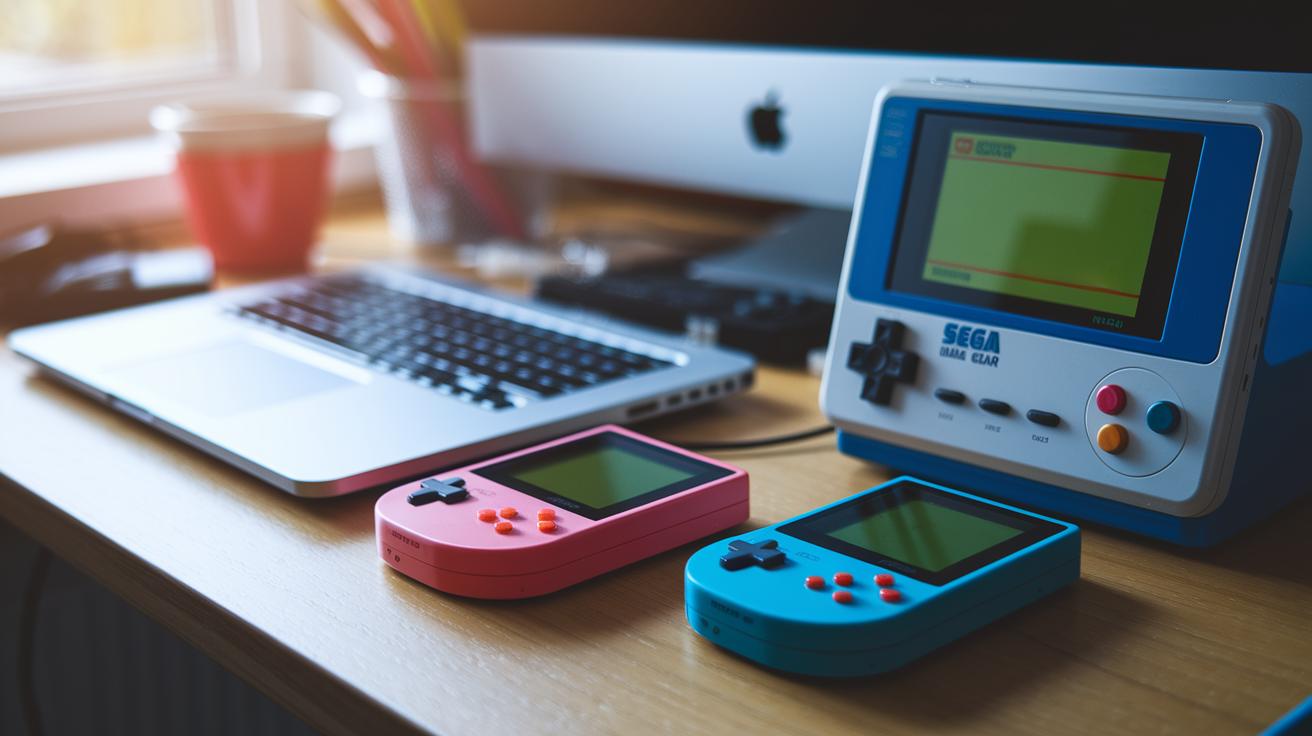
Sega stepped into portable gaming with devices that still excite collectors today. The Game Gear debuted in October 1990. It runs on a Z80 processor at 3.5 MHz and sports a colorful backlit screen. Players enjoyed arcade-quality games anywhere with this device. One fan even said holding the Game Gear felt like carrying a pocket arcade.
Launched in 1993, the Pico was built for learning. It uses a Motorola 68000 processor and interactive game cartridges that mix fun with skill building. This design made learning both entertaining and engaging.
In October 1995, Sega launched the Nomad, a portable version of the popular Genesis console. It brings 16-bit gaming into a compact design so fans can take their favorite titles with them. With Genesis-based hardware, it delivers a home-console feel in a small, portable package.
| Device | Release Date | Processor | Key Feature |
|---|---|---|---|
| Game Gear | October 1990 | Z80 @ 3.5 MHz | Color backlit screen |
| Pico | 1993 | Motorola 68000 | Educational interactive play |
| Nomad | October 1995 | Genesis-based | Portable 16-bit gaming |
Modern Sega Console Reissues and Collector Market
Sega's mini-console reissues bring back the magic of classic gaming with a fresh twist. The Genesis Mini (2019) features an ARM7TDMI chip running at 81 MHz. This setup lets it play 16-bit games smoothly, giving gamers a true blast from the past. In 2020, the Game Gear Micro offered handheld fun with updated internals. Then, in 2022, the Genesis Mini II, which nods to the Japanese Mega Drive 2, kept the trend alive, sparking new excitement among fans and collectors.
These consoles are prized for their limited production runs and the deep nostalgia they inspire. Fans cherish them because they combine modern emulation with authentic gameplay. The key reasons for their popularity include:
| Factor | Reason |
|---|---|
| Nostalgia | Revisits the golden age of Sega gaming |
| Emulation | Uses ARM7TDMI hardware to keep gameplay true |
| Exclusivity | Limited runs boost secondhand value |
A surprising fact: The Genesis Mini blends the 16-bit era's magic into one modern device that delights both longtime fans and new gamers.
These reissues not only celebrate Sega’s past but also connect classic style with today’s collector market. They stand as a bridge between treasured memories and modern gaming needs.
Final Words
In the action, we tracked the timeframe of Sega consoles. We looked at their early arcade beginnings, their technical upgrades, and even their collector appeal with modern reissues. Each section broke down key specs, design changes, and market impact. This recap shows how Sega consoles evolved to shape gaming history. The journey highlights both innovation and challenges. It's clear that these vintage devices still spark excitement among fans, keeping their legacy alive today.
FAQ
What is the chronological order of Sega consoles?
The Sega console lineup starts with the SG-1000 and SG-1000 II, then the Mark III/Master System, followed by the Genesis/Mega Drive, Sega CD, 32X, Saturn, and Dreamcast, plus handheld devices and mini reissues.
Which Sega console is considered the best?
The Sega Genesis/Mega Drive is often praised as the best due to its robust game library, lasting fan appeal, and critical impact on the retro gaming scene.
Are Sega still making consoles?
Sega is no longer producing full-scale home consoles; instead, they focus on third-party software and occasional mini reissues for nostalgic collectors.
What was Sega’s final home console from the 90s?
The Sega Dreamcast was the final home console from the 90s, noted for its online play, innovative hardware, and a modest library that marked the end of Sega’s console manufacturing era.
How much did a Sega Genesis cost in 1992?
In 1992, the Sega Genesis was priced around $189 to $200, varying by region and market conditions as it competed against similar gaming systems.
Do any Sega consoles feature built-in games?
Some modern reissues, like the Genesis Mini, come with built-in games that let users enjoy classic titles without needing the original cartridges or discs.
What handheld consoles did Sega release?
Sega’s handheld lineup includes the Game Gear with a color backlit screen, the educational Pico, and the Genesis-based Nomad, each notable for bringing gaming on the go.
What does “Sega consoles Sonic” refer to?
This refers to Sega systems that played Sonic the Hedgehog games. Consoles like the Genesis and Dreamcast were home to the iconic Sonic franchise, which hugely shaped Sega’s identity.
Where can one find Sega consoles for sale?
Vintage Sega consoles are available on various collector sites and online marketplaces, offering retro enthusiasts a chance to own pieces of gaming history.