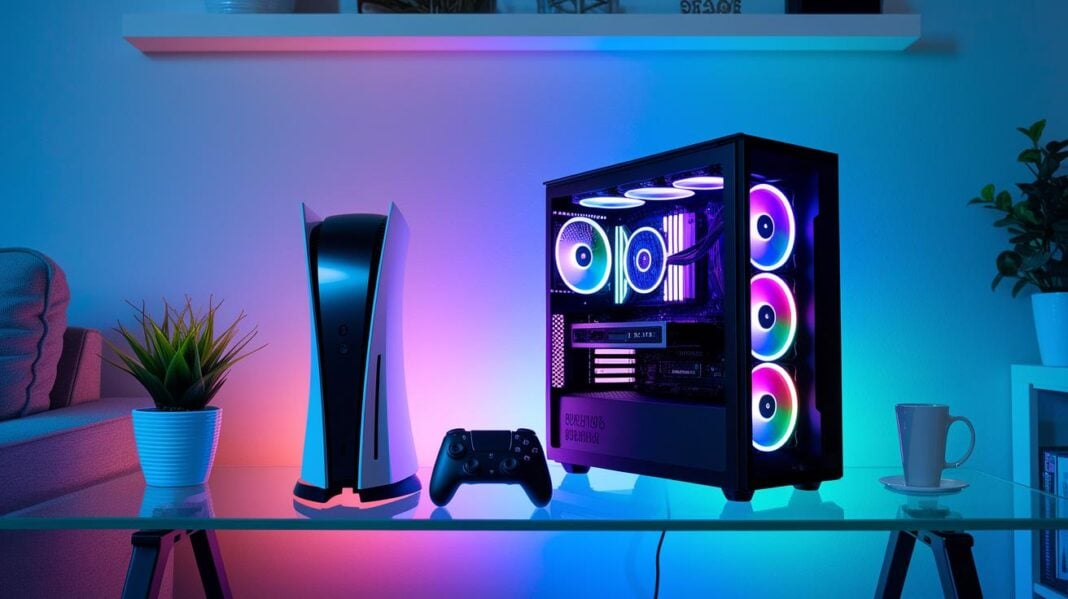
Have you ever thought about whether a PC's raw power wins over a gaming console's ease of use? PCs deliver high FPS (frames per second), fast load times, and many customization options. In contrast, gaming consoles are budget-friendly and simple to set up.
This guide compares both options side by side. We break down key details such as FPS, upgrade potential, and overall cost. Our goal is to help you decide which gaming platform gives you more value for your money. Stick with us to see which one could be your perfect gaming match.
Definitive gaming consoles vs PC analysis
PCs shine when it comes to customization, upgradeability, and raw power. You can start with an entry-level build for about £700, while high-performance rigs can cost over £4000. These systems offer great FPS performance: entry-level PCs hit 60 FPS on medium settings, mid-range systems push 120-144 FPS at 1080p, and top-tier setups can run esports games at 240-360 FPS. Fast GPUs and NVMe SSDs also speed up game loading by 30-40%, and wired networking keeps latency below one millisecond. This lets gamers fine-tune their systems for vivid visuals and quick responses.
Consoles deliver a simple plug-and-play experience at a lower cost, usually between £200 and £500. Their user-friendly design means you don’t have to worry about complex setup, which is great for beginners and families. Consoles support 4K gameplay and have built-in networking optimized for smooth performance without extra hassle. For extra savings, check out cheap gaming consoles. Their streamlined and budget-friendly approach makes consoles a smart choice if you want an easy and steady gaming experience.
| Platform | Pros | Cons |
|---|---|---|
| PC | High customization; superior performance; quicker loading; upgradeable | Higher cost; more complex setup |
| Console | Affordable; plug-and-play simplicity; optimized design | Limited upgrade options; lower raw performance |
gaming consoles vs PC hardware performance benchmarks
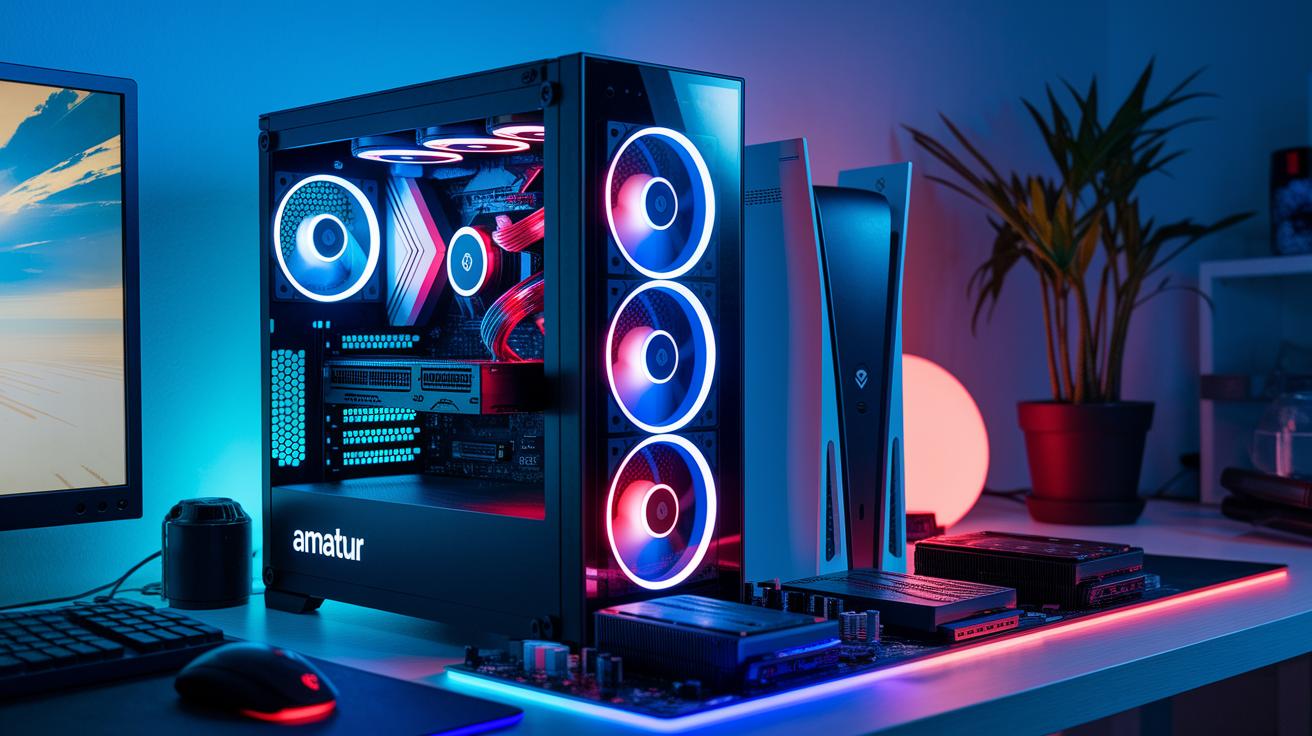
Benchmarks help us see how well hardware works beyond just counting frames. In this section, we look at subtle differences like cooling methods and performance tactics that give PCs an edge over consoles.
CPU & GPU comparisons
Most PC builds use custom cooling solutions that keep both CPUs and GPUs running smoothly when they work hard. For example, the Intel i5-12600K pairs with a smart cooler that speeds up its fans when the temperature hits 70°C, keeping performance stable. Consoles, with their fixed airflow, don't offer this flexibility. This cooling boost helps PCs maintain high clock speeds and manage multiple cores during long gaming sessions.
Resolution and Frame Rate
Consoles are set up to hit steady targets like 1080p at 60 FPS or 4K at 30 FPS. PCs, however, can go further with setups reaching 8K and higher FPS. To handle this, efficient cooling solutions prevent overheating during long play times. Many high-end PCs even use water-cooling loops that keep temperatures low under heavy 8K gaming loads. This approach ensures stable performance over time, keeping benchmark numbers consistent.
gaming consoles vs pc: Winning Performance, Smart Value
Entry-level PC builds start at £700. Mid-tier systems cost between £1200 and £1500. High-end rigs can top £4000. In contrast, consoles sell for around £200 to £500. This lower price gives a clear benefit for those on a budget. You can choose between a PC for raw performance and more customization or a console for ease and lower upfront cost.
Mid-range PCs use between 300 and 450 W under full use. Consoles, on the other hand, draw only 150 to 200 W. This difference may affect your energy costs over time. With a PC, you often pay more later when you upgrade parts like the GPU, CPU, or RAM. This lets you boost performance without buying a whole new system. Consoles require a new hardware purchase with every new generation.
Also, PC gamers can benefit from seasonal sales and a large selection of free-to-play games. These options help reduce software costs over time. Console users usually rely on paid downloadable content or subscription services to get new titles and features. While consoles may seem cheaper at first, PCs offer more control over long-term expenses and performance upgrades. This makes PCs a smart choice for gamers who want future-proofing and scalability.
gaming consoles vs PC ecosystem and game libraries
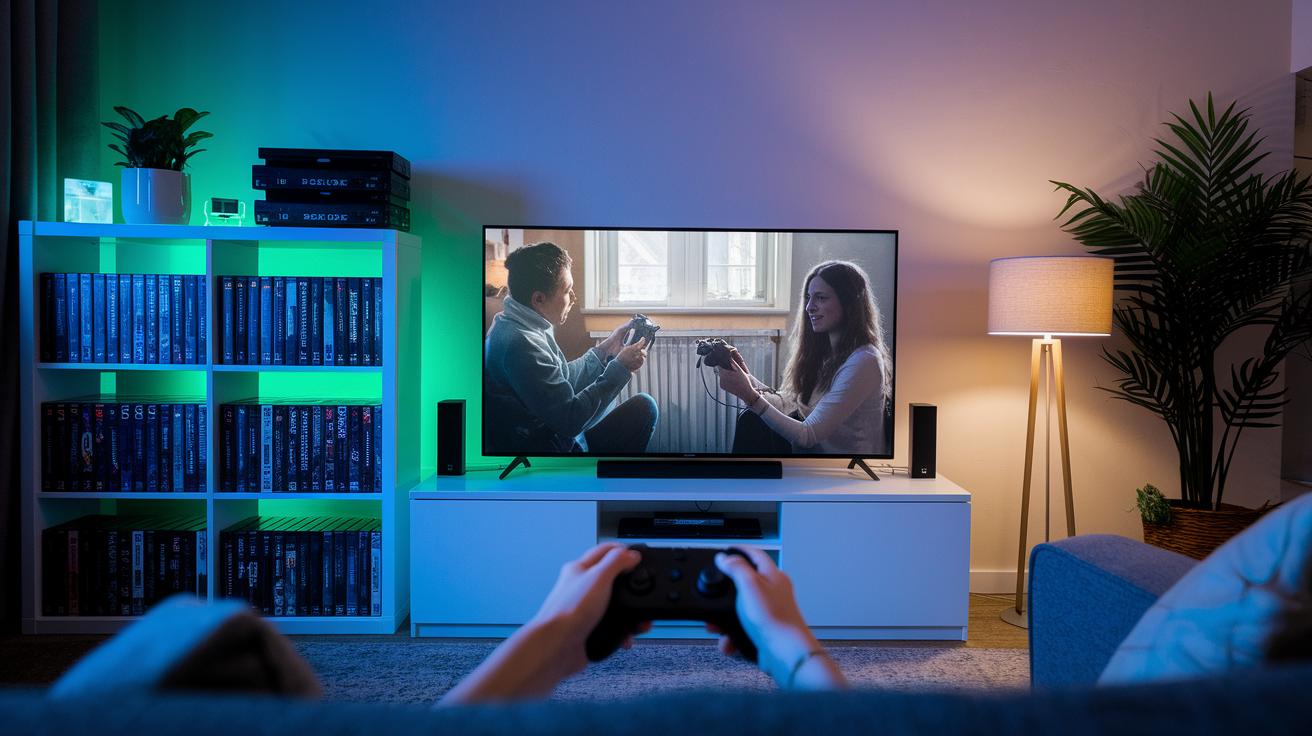
Console systems shine because of their exclusive games and subscription plans. Iconic series like Zelda, Mario, Halo, and The Last of Us draw many players to these systems. Services such as Xbox Game Pass and PlayStation Plus offer new games on a regular basis so you always have something fresh to play. You get access to new titles without having to purchase every game. Plus, physical releases and limited-edition bundles add extra charm, making the whole setup simple and familiar.
PCs provide a huge digital game library through platforms like Steam and the Epic Games Store. Here, you can find everything from indie gems to big blockbuster titles. Gamers also love the frequent sales that help cut down costs. While consoles like the Xbox Series X and PlayStation 5 handle backward compatibility by supporting most older games, PCs rely on emulators or mods for older titles. Some games even offer cross-play, but it is often limited by platform, which can affect multiplayer experiences for some players.
gaming consoles vs PC customization and upgrade options
PCs are great for users who want to improve and personalize their systems. You can swap key parts like the GPU, CPU, RAM, and storage to boost performance over time. This makes it easier to keep up with the latest games. Many modding groups also add custom cooling, RGB lighting, and BIOS tweaks for overclocking. For example, replacing a standard cooler with an aftermarket one helps keep temperatures low during long gaming sessions.
Consoles, on the other hand, are closed systems with few upgrade options. The only change you can usually make is expanding storage with an external drive. Swapping out core parts like the CPU or GPU is not supported and can void your warranty. While this design makes consoles simple to use, it limits how much you can customize them. Overall, PCs offer a more flexible system for upgrades, while consoles lock you into a set performance level.
gaming consoles vs PC control and user experience differences

PCs lead when it comes to input speed. A keyboard and mouse get you response times under 1 ms, which is ideal for quick moves and pinpoint aiming. Console controllers, on the other hand, are built for comfort with ergonomic designs and usually work with a 4–8 ms wireless delay. In fast, competitive games, those tiny differences can make a big impact.
Consoles win on ease of setup. They offer plug-and-play use with your TV so you can start playing right away. PCs require an operating system installation and sometimes driver updates, which can slow things down a bit. Plus, PCs support many third-party devices for a more customized experience, while consoles often stick to licensed accessories. In the end, these differences in controls and setup shape your overall game feel.
Final Words
In the action, we broke down PC power with its upgradeability and raw performance against the plug-and-play ease of consoles. We looked at cost, performance, game libraries, and control differences, letting you weigh trade-offs easily.
Our gaming consoles vs pc analysis shows that each option has its wins. PCs offer flexibility and high-end specs, while consoles provide budget-friendly simplicity and solid performance.
Both paths offer clear benefits. Choose the one that fits your style and budget best. Enjoy your gaming experience!
FAQ
What do PC vs console gaming statistics reveal?
The statistics reveal that PCs deliver higher frame rates and greater customization, while consoles offer affordability and plug-and-play simplicity. This helps gamers choose based on performance needs and budget preferences.
What insights do forums like Reddit offer on console vs PC gaming?
Online discussions emphasize that PCs allow for hardware upgrades and superior performance, while consoles are favored for their ease of use and consistent out-of-the-box experience, reflecting varied gamer priorities.
What are the pros and cons of PC gaming compared to console gaming?
The pros of PC gaming include high customization, upgradeability, and top-notch performance. In contrast, consoles bring lower cost, simple setup, and reliable performance, making each option worthy based on user needs.
What makes PC gaming better than console gaming?
PC gaming is often seen as superior due to its flexible hardware, better graphics capabilities, and the option to upgrade components over time, which lets gamers tailor the experience to their specific demands.
How do game libraries differ between PC and consoles?
PC platforms offer expansive digital storefronts with frequent sales and a rich selection of indie games, while consoles provide exclusive titles and subscription services that focus on popular, branded franchises.
What are the main differences in graphics between PC and console gaming?
PC graphics can reach higher resolutions with advanced features like ray tracing and smoother frame rates, whereas consoles tend to balance visuals with performance and cost, often capping at 1080p or 4K in select models.
How does performance compare between PC and console gaming?
PC performance typically features faster load times, higher frame rates, and customizable settings, while consoles offer uniform performance with minimal setup, making PCs suited for those who want tailored gaming power.
How does market share compare among PC, Xbox, and PlayStation gaming?
Market share trends show that Xbox and PlayStation dominate in affordability and simplicity, whereas PCs capture a niche audience that values customization and superior performance, appealing to different types of gamers.
Can a $500 PC run Fortnite?
A $500 PC can run Fortnite at medium settings with playable frame rates when equipped with entry-level components, though performance may vary with the specific hardware and game configuration.
Is a PlayStation 5 or a gaming PC a better choice for gaming?
A PlayStation 5 offers a straightforward, ready-to-play experience along with exclusive games, whereas a gaming PC delivers higher customization and potential performance boosts, so the best choice depends on personal gaming priorities.