Have you ever wondered if Apple's 5G phones live up to the hype? With faster connections and smoother performance, Apple has raised the bar for mobile communication. From the affordable iPhone SE (3rd Gen) to the flagship iPhone 14, each model offers a distinct benefit for everyday use. In this piece, we review five phones known for their speed and reliable performance. Keep reading to see how these devices perform in real life.
Apple 5G iPhone Lineup: All Models Supporting 5G with Release Dates
Apple made a big shift with the iPhone 12 series in October 2020 by adding 5G. The iPhone 12 series worked with both low-band and mmWave in the U.S. and some other regions. This upgrade meant faster speeds and less lag. If you want more on future mobile tech, check out our review of 5g smartphones.
Since then, Apple has expanded its lineup. The iPhone 13 series improved the antenna design to support more carriers, including the fast C-band. Then, the iPhone SE (3rd Gen) joined in March 2022. It brings 5G over Sub-6GHz in a small and budget-friendly design. The iPhone 14 series, released in September 2022, builds on that with better cameras and faster performance while keeping steady 5G.
| Model | Release Date | 5G Bands (Low-band/Sub-6GHz/mmWave) |
|---|---|---|
| iPhone SE (3rd Gen) | March 2022 | Sub-6GHz only |
| iPhone 12 mini | October 2020 | Low-band, Sub-6GHz, mmWave |
| iPhone 12 | October 2020 | Low-band, Sub-6GHz, mmWave |
| iPhone 12 Pro | October 2020 | Low-band, Sub-6GHz, mmWave |
| iPhone 12 Pro Max | October 2020 | Low-band, Sub-6GHz, mmWave |
| iPhone 13 mini | September 2021 | Low-band, Sub-6GHz, mmWave |
| iPhone 13 | September 2021 | Low-band, Sub-6GHz, mmWave |
| iPhone 13 Pro | September 2021 | Low-band, Sub-6GHz, mmWave |
| iPhone 13 Pro Max | September 2021 | Low-band, Sub-6GHz, mmWave |
| iPhone 14 | September 2022 | Low-band, Sub-6GHz, mmWave |
| iPhone 14 Plus | September 2022 | Low-band, Sub-6GHz, mmWave |
| iPhone 14 Pro | September 2022 | Low-band, Sub-6GHz, mmWave |
| iPhone 14 Pro Max | September 2022 | Low-band, Sub-6GHz, mmWave |
Apple's 5G phones vary in how they support different bands and regions. Phones with mmWave work best in areas with strong network coverage, while Sub-6GHz is available in most regions. This mix of options lets you choose the right balance of performance, battery life, and price.
Apple 5G Phones Performance: Real-World Speed and Reliability
iPhones now offer a clear boost in performance with 5G compared to 4G LTE. In tests, Sub-6GHz shows speeds from 200 to 500 Mbps, while mmWave can reach up to 1–3 Gbps in crowded U.S. cities. Latency drops notably, so streaming and real-time apps run more smoothly. The iPhone 13 uses an improved antenna design that supports the C-band on over 200 carriers, which makes switching networks less noticeable. Also, settings like Data Mode and Voice & Data let you balance speed, battery use, and data consumption.
- Sub-6GHz provides steady coverage at good speeds; mmWave gives blazing speeds in small areas.
- Lower latency means apps respond faster and video calls are smoother.
- Carrier plans vary: T-Mobile features 5G on all plans, while Verizon and AT&T require unlimited plans for 5G.
- The iPhone 13’s better C-band support improves connections in busy urban spots.
- Data Mode allows you to reduce speed to save battery when needed.
Real-world performance can change based on your region and carrier. Urban areas with many mmWave towers see big speed boosts, while suburban areas using Sub-6GHz might get steadier yet slower connections. Network congestion and environmental factors also play a part. Even though lab speeds look impressive, everyday use can vary. Still, lower latency and reliable connections make these iPhones a solid choice for fast downloads, clear streaming, and quick app responses.
Apple 5G Phones Technical Specs: Chipsets and Band Support
Apple has steadily improved the chips and 5G modems in its iPhones to offer better speed and connection quality. The iPhone 12 series launched 5G using the A14 Bionic chip with a Qualcomm X55 modem that supports both low-band frequencies and millimeter wave (mmWave). Later, the iPhone 13 series and the iPhone SE (3rd Gen) moved to the A15 Bionic chip. They now use an integrated 5G modem with a tweaked antenna that reaches a wider C-band on more than 200 carriers. The iPhone 14 Pro series takes it further with the A16 Bionic chip, which improves power use while keeping all the 5G benefits.
| Model | Chipset | 5G Modem | Antenna Highlights |
|---|---|---|---|
| iPhone 12 series | A14 Bionic | Qualcomm X55 | Supports low-band and mmWave |
| iPhone 13 series | A15 Bionic | Integrated 5G modem | Enhanced design for wider C-band |
| iPhone SE (3rd Gen) | A15 Bionic | Integrated 5G modem | Compact design with efficient connectivity |
| iPhone 14 Pro series | A16 Bionic | Improved 5G modem | Optimized for power efficiency and stability |
These updates let all 5G iPhones use Sub-6GHz networks, while mmWave remains available in some regions. This means you get stable and fast connections even in busy areas. The steady chip improvements help boost network reliability and manage power more efficiently across Apple’s lineup.
Apple 5G vs 4G iPhones: Key Differences and Upgrade Benefits
Apple’s 5G iPhones offer a noticeably smoother experience. Video calls stay steady and games run with less lag, so everything feels more immediate, even during live streams where delays are almost gone.
However, our real-world tests show that the boost in speed can lead to higher battery use, especially when using high-band signals. For some users, 5G might even replace home internet, which can help you cut costs if you work remotely or stream often.
Key points:
- Reliable streaming even during peak usage.
- Faster multiplayer gaming with less delay.
- Potential savings by swapping out your home internet.
- Increased battery drain when using high-band signals.
Before upgrading, check your local 5G coverage and consider your daily data needs. In areas where 5G is scarce, the benefits may not outweigh the extra battery use.
Apple 5G Phones Battery Life and Data Settings Insights
Apple’s 5G phones offer different battery lives depending on the model. The iPhone SE (3rd Gen) lasts up to 15 hours of video, making it a smart pick if you want a small phone that still keeps up with your day. The iPhone 12 series reaches about 17 hours of video playback, which works well for daily tasks. The iPhone 13 family shines with the longest battery life. The regular version gives you about 19 hours, while the Mini lasts around 17 hours. This variety helps you choose the right model for your needs.
Here are a few tips to save battery and data:
- Switch to Low Data Mode during video streaming to save power.
- Choose the Voice & Data setting, 5G Auto, to balance speed and efficiency.
- Use LTE in areas where 5G signals are weak to extend battery life.
- Update your data settings based on current network conditions and usage.
iOS also helps boost battery life by cutting down on high-band 5G when the phone is idle. This smart feature reduces extra data use and power drain, so you get the most out of every charge without constant tweaks.
Apple 5G Phones Buying Guide: Pricing, Storage, and Carrier Compatibility
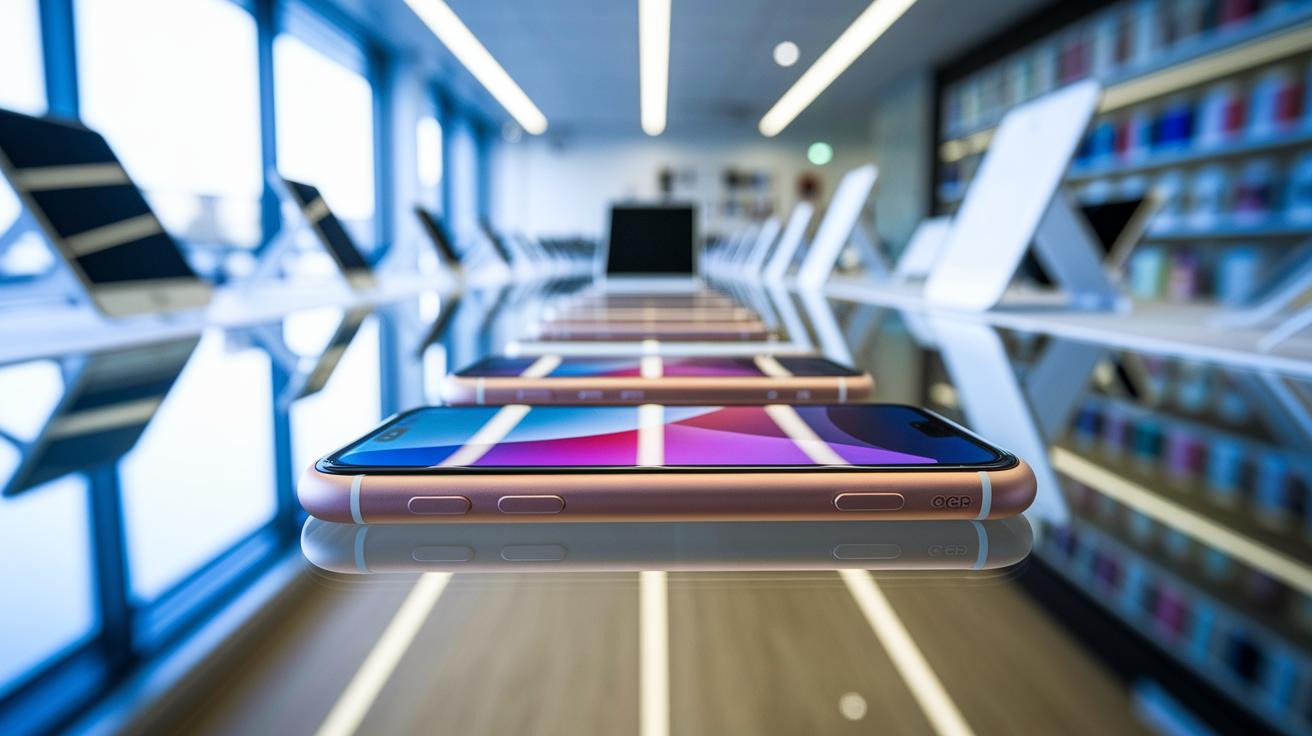
When looking for an Apple 5G phone, price and storage are key points to consider. Apple's range offers something for every budget. For example, the Apple iPhone SE (3rd Gen) comes in 64GB, 128GB, and 256GB options and starts at an affordable price. The iPhone 12 series begins at 64GB and goes up to 256GB for standard models and even 512GB for Pro versions. The iPhone 13 series ups the ante with storage choices from 128GB to 512GB. The pricier iPhone 14 series gives you modern features with a simple storage lineup. Each option ensures you get fast 5G speeds and enough space for your apps, photos, and media.
| Model | Starting Price | Storage Options | Best For |
|---|---|---|---|
| iPhone SE (3rd Gen) | from $399 | 64GB/128GB/256GB | Budget buyers |
| iPhone 12 | from $499 | 64GB–256GB (Pro up to 512GB) | Entry-level 5G |
| iPhone 13 | from $699 | 128GB–512GB | Balanced performance |
| iPhone 14 | from $799 | 128GB/256GB | Latest features |
Carrier compatibility is also important. Some carriers like T-Mobile include 5G on all plans. Others, like Verizon and AT&T, need you to choose an unlimited plan to use their advanced networks. Check your local 5G coverage and plan details first to make sure you get the best speeds and low lag on any iPhone you pick.
Final Words
In the action, we broke down Apple’s shift to 5G, covering everything from release dates and benchmark speeds to chip upgrades and battery tips. We looked at the differences between 5G and 4G performance and offered a buying guide that fits various budgets. Each section gives clear trade-offs so you can decide confidently. Apple 5g phones bring faster speeds and reliable performance, helping you choose a device that meets your needs and delivers a smooth everyday experience. Enjoy your next smart purchase!
FAQ
Frequently Asked Questions
What Apple phones are 5G?
The question about which Apple phones support 5G means that models from the iPhone 12 series onward offer 5G connectivity, while earlier models like the iPhone 11 are limited to 4G LTE.
Is the iPhone 12 a 5G phone and which models have 5G networks?
The inquiry about the iPhone 12 and 5G networks tells us that the iPhone 12 supports 5G with both mmWave (in select regions) and low-band options, joining later models that continue this capability.
Is the iPhone 11 5G capable?
The question regarding the iPhone 11’s network speed means that the iPhone 11 supports only 4G LTE. It lacks the hardware to activate 5G, so there is no setting to turn on 5G on this model.
Where can I find unlocked and for-sale Apple 5G phones?
The inquiry about unlocked or for-sale Apple 5G phones indicates that you can check local retailers, carrier stores, and reputable online outlets for new and certified refurbished models from Apple.
Do Apple 5G phones work on AT&T networks?
The question about Apple 5G phones on AT&T means that these models are compatible with AT&T networks, provided you have the required unlimited plan that supports full 5G functionality.
What are the disadvantages of 5G phones?
The query on disadvantages of 5G phones tells us that potential issues include higher battery usage and uneven coverage, especially in areas with less 5G network investment or during times of high network congestion.
What is included in Apple’s 5G phone lineup?
The question regarding Apple’s 5G lineup means that the series starts with the iPhone 12 and spans models like the iPhone 13, iPhone 14, and select iPhone SE versions, each bringing specific features and network options.